What if everything you need to grow your business is hidden in plain sight?
Most companies collect mountains of customer feedback. But still, they miss out on the insights that could fuel growth and innovation. Instead of digging into the data, many are left with generic reports that don’t tell the full story. So, what’s really happening to all that feedback?
For many teams, there are valuable insights waiting to be uncovered. Insights sitting around, or others that companies simply don’t know how to find.
In this article, we’ll reveal 5 data-driven strategies for uncovering hidden insights in your customer feedback–strategies that most companies overlook.
1. Discover Emerging Trends Before Your Competitors Do
The next emerging trend in your industry is likely already showing up in your customer feedback.
Most companies are too focused on the here-and-now, or too invested in maintaining the current engine, to realize that their customers are already hinting at what's coming next. But what if you could spot these emerging trends before your competition does?
Traditional feedback methods don’t always help you catch these subtle shifts. Companies that rely on manual categorization or basic sentiment analysis only scratch the surface of what's really going on.
Instead, we need to look for powerful clues that, when combined and analyzed properly, can reveal patterns that point to future opportunities.
That’s where Kapiche comes in.
Kapiche uses advanced text analytics to help you dig deeper into your customer feedback and automatically identify emerging patterns. Whether it’s new product features your customers are raving about, frustrations with your service, or an upcoming trend in consumer preferences, Kapiche’s algorithm does the heavy lifting to surface insights you might have missed otherwise.
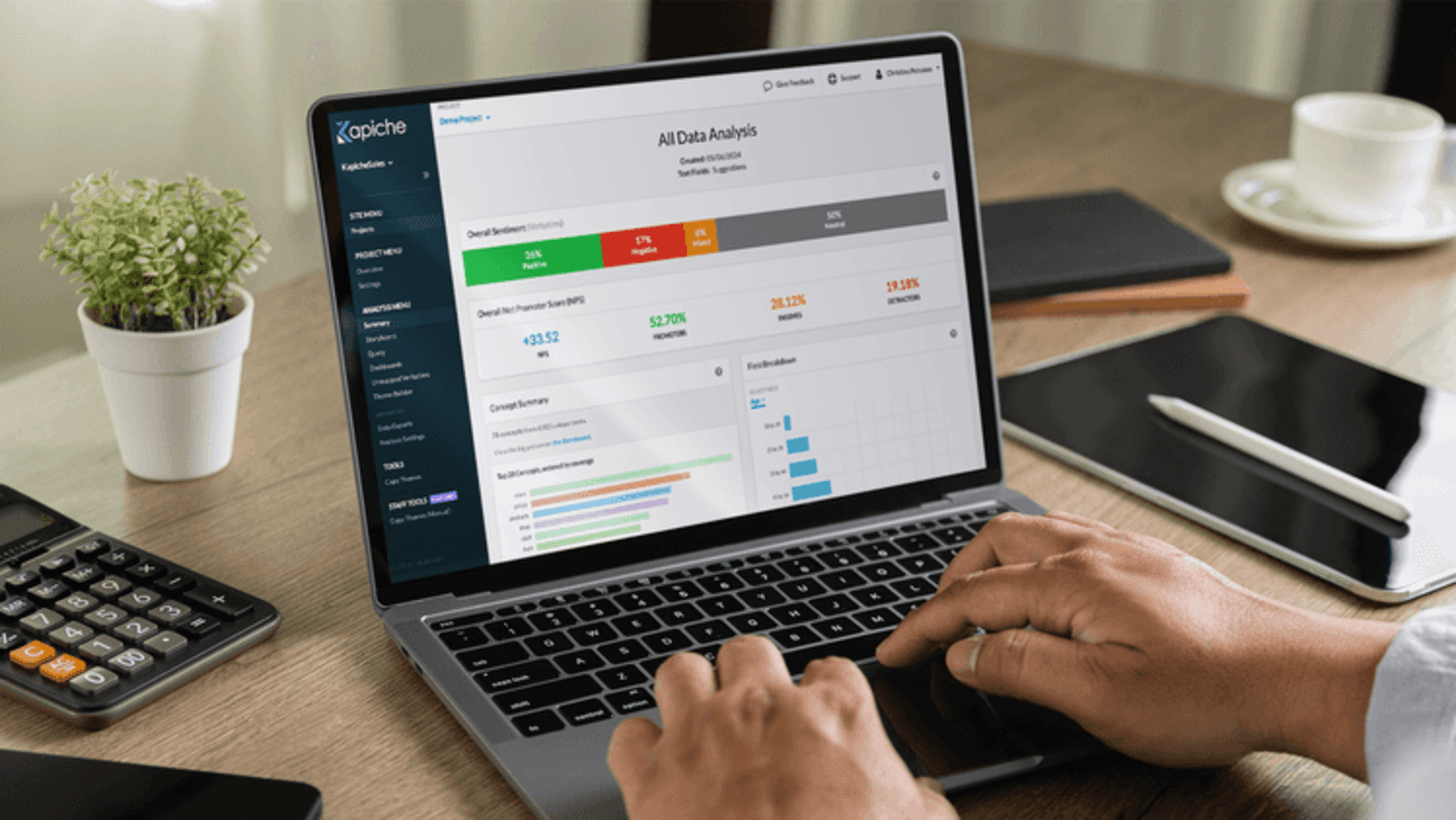
What if you could anticipate the next big customer need and pivot your product strategy accordingly? Or, what if you could proactively fix customer pain points before they become widespread problems? With Kapiche’s emerging trend detection, you have the tools at your fingertips to stay ahead of the curve.
2. Segment Your Feedback to Unlock Hidden Goldmines
All customer feedback is not created equal.
If you treat every comment or survey response the same, you’re not tapping into the true power of your data. In fact, you're probably overlooking critical insights that could significantly impact your business strategy.
Your customers don’t all think, feel, or act the same way. But most businesses treat feedback like a one-size-fits-all, grouping data into vague categories that don’t provide much value. So, how can you dig deeper?
You need to start leveraging advanced segmentation.
At Kapiche, we enable this through advanced text analytics that let you segment customer feedback in ways that unlock powerful insights. Instead of just looking at broad sentiments, you can break your feedback down into specific segments based on things like customer type, behavior patterns, or even specific pain points.
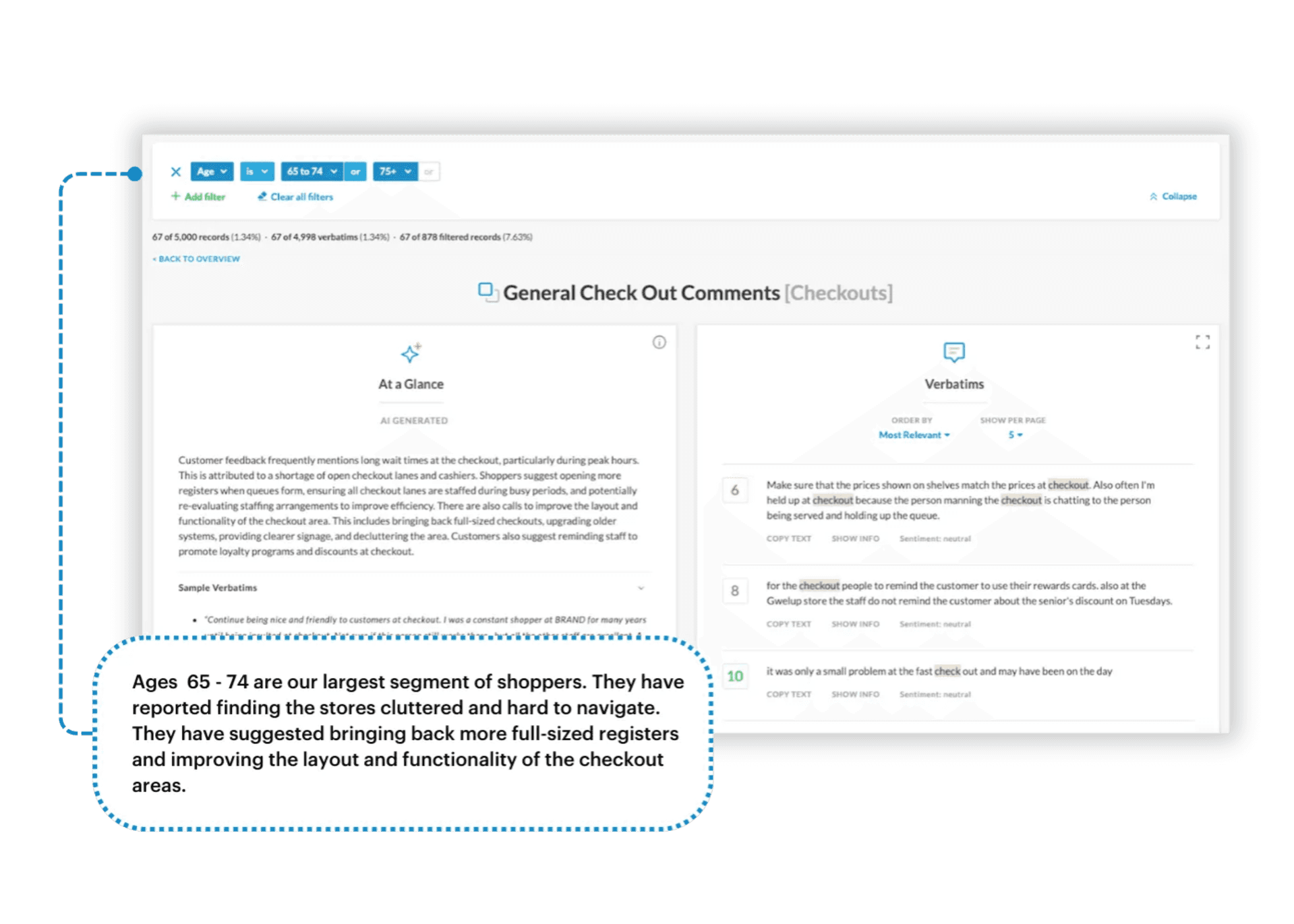
For example, what if you could see how new customers feel about your onboarding process, versus how long-time users view it? Or what if you could compare feedback from high-value customers versus budget-conscious ones?
“When you segment feedback, you get the full picture. You uncover nuances and patterns that may otherwise fly under the radar.
3. Uncover Hidden Pain Points with Advanced Sentiment Analysis
What is your customer really feeling about your product or service?
It’s one thing to know whether they’re happy or upset. But true insight comes from digging deeper into the emotions behind their words. To truly understand your customers, you need to uncover the underlying pain points that drive their feelings.
While traditional sentiment analysis might categorize feedback into simple positive or negative buckets, Kapiche takes it a step further. The platform analyzes the tone, context, and sentiment intensity of each customer comment, allowing you to get a more accurate reading of their true emotions.
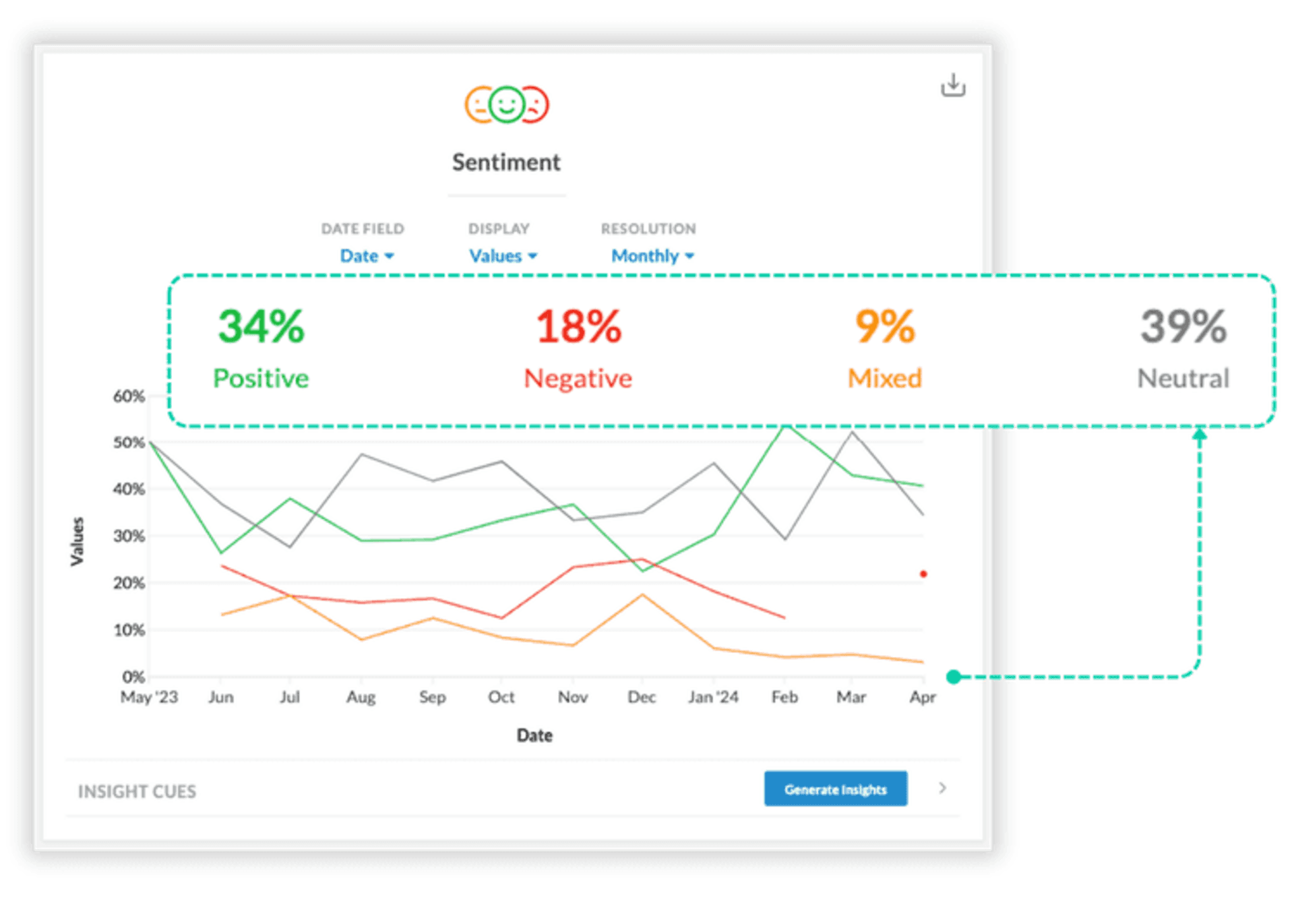
Let’s say you’ve received thousands of feedback responses about a new product launch. Instead of making conclusions on the surface-level data that 70% of comments are positive, what if you could go a level further? Is it the speed of your service they love? Or something else? By identifying these nuances, you get a deeper understanding of what’s really driving customer emotions and satisfaction.
4. Connect Customer Feedback with Other Data Sources for a Holistic View
Too many companies analyze customer feedback in isolation, missing valuable connections to other business data.
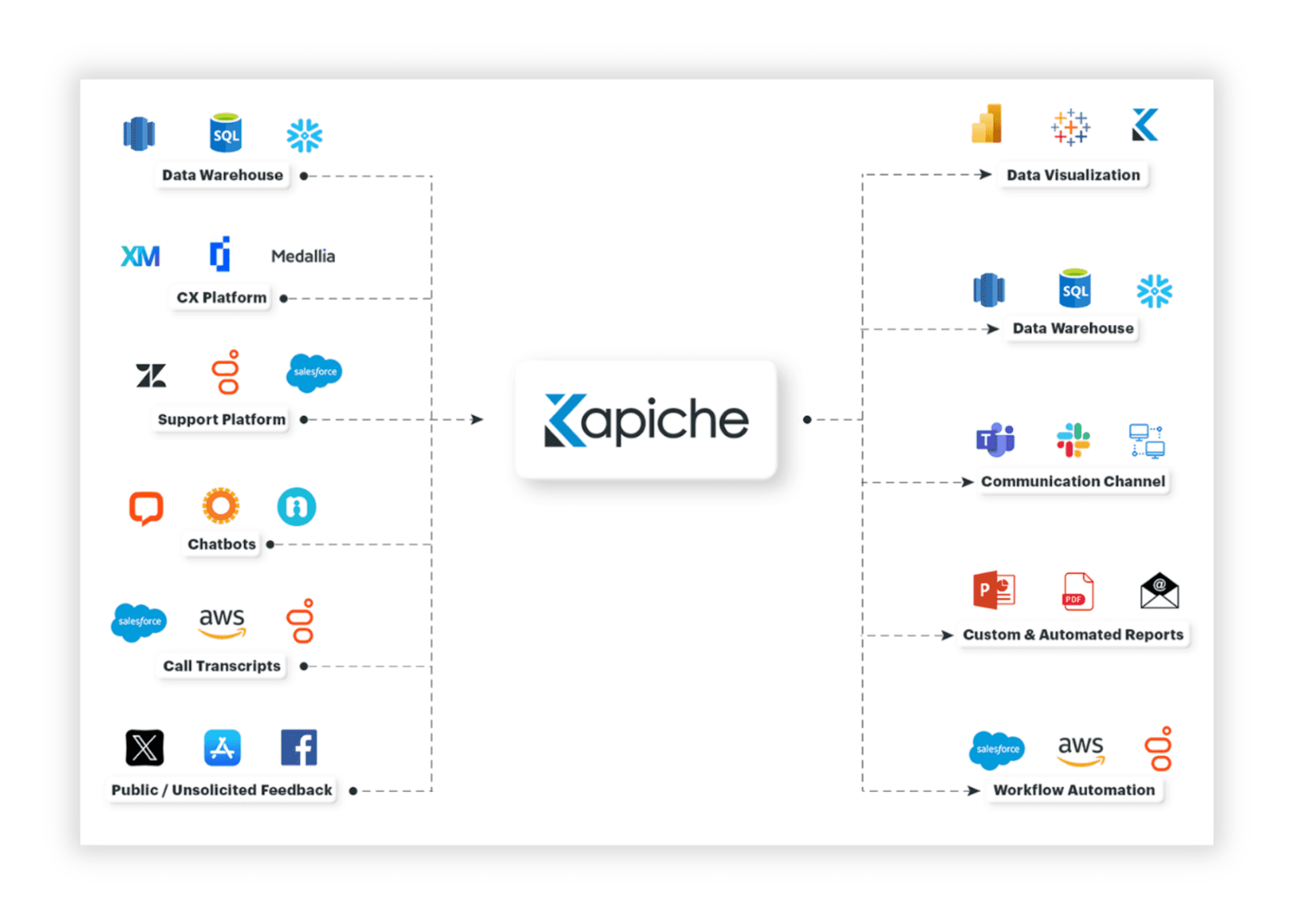
But when you integrate feedback with operational data—like CRM sales data, customer support logs, or product usage metrics—you unlock a 360-degree view of your customer experience.
A spike in negative feedback about "slow response times" is meaningless on its own. But link that feedback to customer support ticket data, and you might uncover that the complaints are tied to a specific region or a new service policy. Pairing that same customer feedback with sales data might reveal that customers who are frustrated with a certain feature are also more likely to churn. This gives you a clear area for improvement.
This is where Kapiche’s ability to integrate multiple data sources becomes invaluable. By layering qualitative customer feedback with quantitative business data, you get context-rich insights that help you pinpoint what themes are impacting customer experience, and align your CX strategies to revenue outcomes.