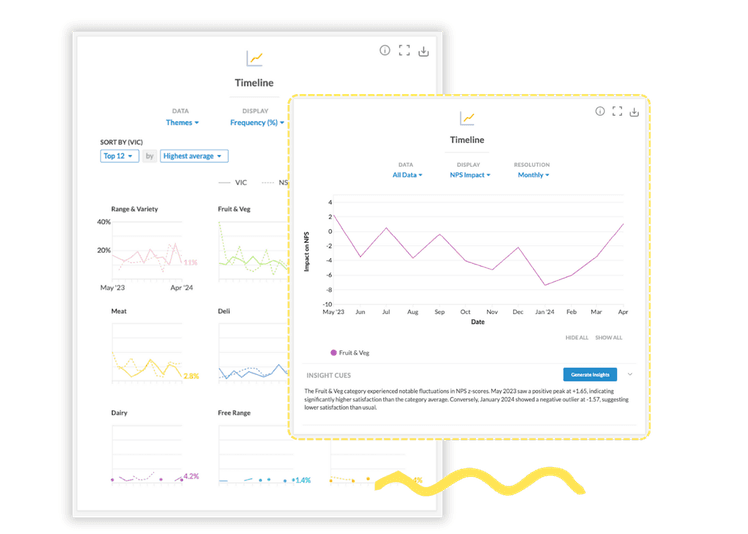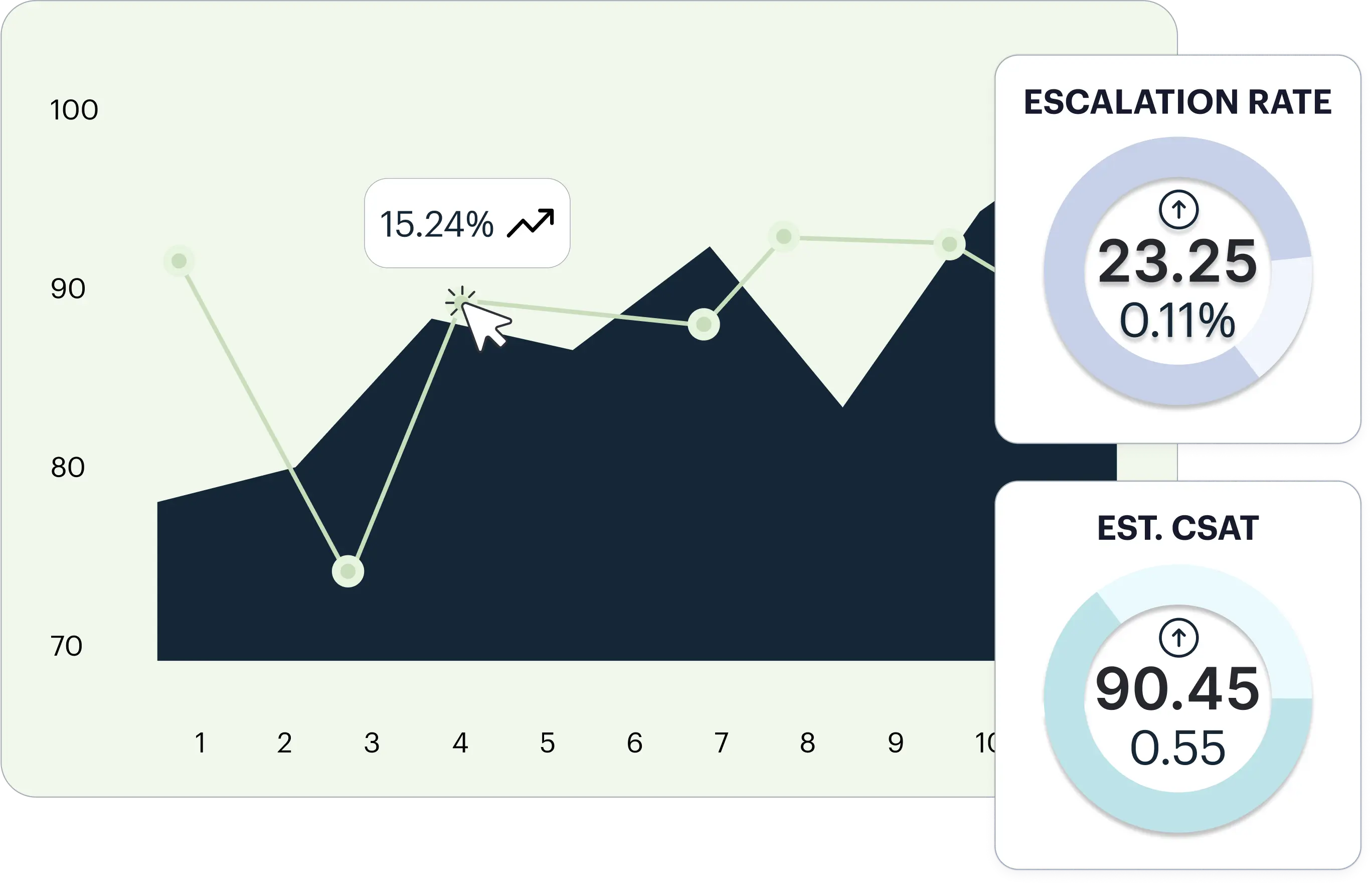
So, you’re trying to figure out how to integrate AI into your customer insights strategy. What do you focus on first? And what tools are going to get you the furthest to support your existing workflow?
If you’ve been struggling to answer these questions, you’re not alone. Many VoC and insights leaders are in the same boat. With the pace at which AI is evolving, it’s easy to get overwhelmed. But ignoring AI and continuing business as usual is not a great option. If you’re not leveraging AI to understand your customers, you will fall behind in the market.
A 2024 study found that companies using AI-powered CX programs experienced a 50% greater increase in customer satisfaction rates year over year (10.2% vs. 6.8%), compared to non-AI users. These teams also saw 2.1 times greater year-over-year improvement in customer effort scores.
Pretty impressive, right? AI can be a game-changer for your CX strategy. By tracking and analyzing real-time customer behaviour, AI helps businesses quickly adapt to shifting customer preferences. This ability to understand and respond to customer feedback and behavior can significantly enhance your customer relationships.
By the end of this article, you’ll have a better grasp on how AI customer analytics can elevate your approach to customer experience.
Let’s dive in.
What Is AI Customer Analytics?
AI customer analytics is all about using artificial intelligence to analyze customer data. It involves leveraging AI algorithms and machine learning to sift through vast amounts of information, identify patterns, and provide actionable insights. Think of it as having a super-smart assistant who can process data at lightning speed and offer you clear, data-driven answers.
Why should you care, as an Insights lead? The reality is, traditional methods of analyzing customer data just don’t cut it anymore. Businesses today generate so much data that it’s impossible for human analysts to keep up. AI can process this data quickly and accurately, revealing insights that might have been missed otherwise.
If your goal is to improve customer satisfaction and loyalty, you need to be looking across the entire customer journey and analyzing data from all corners of the organization. With AI customer analytics, you can analyze customer feedback in real-time, track sentiment across various touch points, and even predict future customer behaviour. This means you can proactively address issues before they escalate, personalize customer experiences, and ultimately drive higher satisfaction and loyalty. By leveraging AI-driven insights, businesses can better understand customer preferences and pain points, leading to stronger customer relationships and a competitive advantage in the market.
How Does AI Support Customer Insights?
Now that we’ve covered what AI customer analytics is, let’s talk about how it actually supports customer insights.
As an Insights Manager or CX lead, you’re probably familiar with the feeling of trying to piece together a puzzle with thousands of tiny pieces. Each piece represents a snippet of customer data—feedback, purchase history, browsing behaviour, social media interactions, and so on. Leveraging AI is like having a supercharged puzzle master who can put those pieces together in record time, revealing the bigger picture with stunning clarity.
AI analytics supports customer insights in several powerful ways:
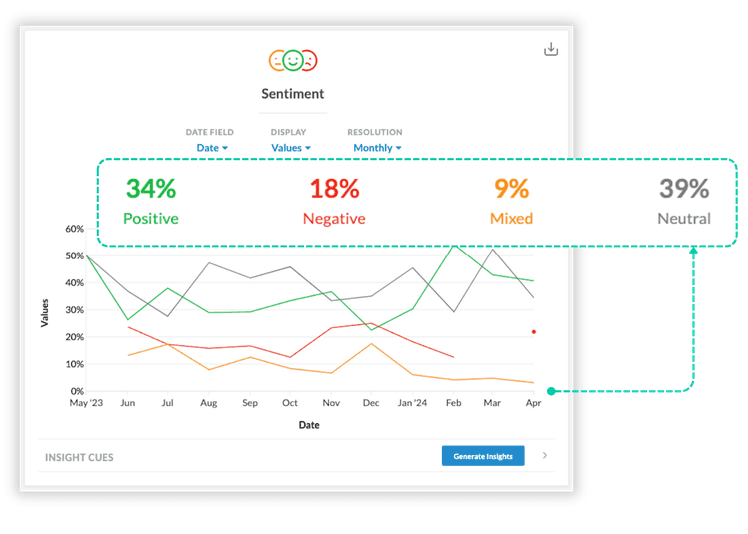
Sentiment Analysis: Understanding how your customers feel is crucial. AI can analyze text from customer feedback, social media posts, and reviews to gauge sentiment. It can tell you whether your customers are happy, frustrated, or indifferent, allowing you to respond appropriately.
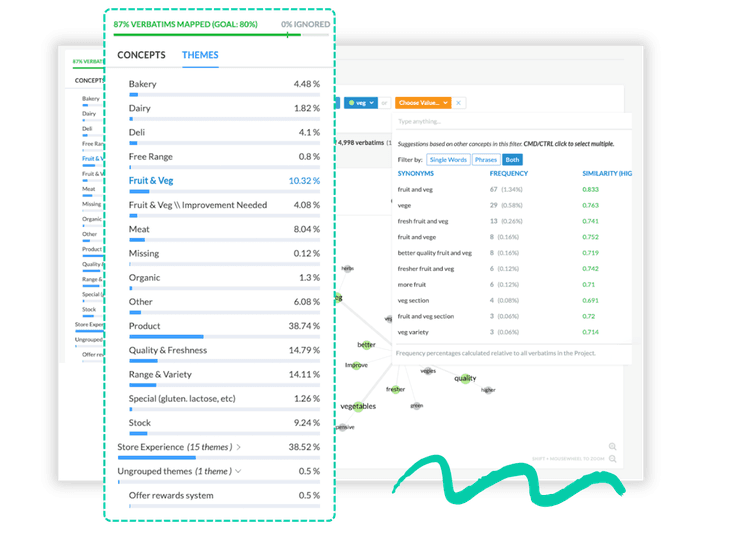
Automatic Feedback Theming: Manually categorizing customer feedback is time-consuming and prone to errors. AI can automatically theme feedback, identifying common issues and trends. This helps you understand what’s working and what needs improvement.
Real-Time Insights: In today’s fast-paced world, real-time insights are invaluable. AI can process data as it comes in, providing you with up-to-the-minute information. This means you can make informed decisions quickly, adapting your strategies as needed.
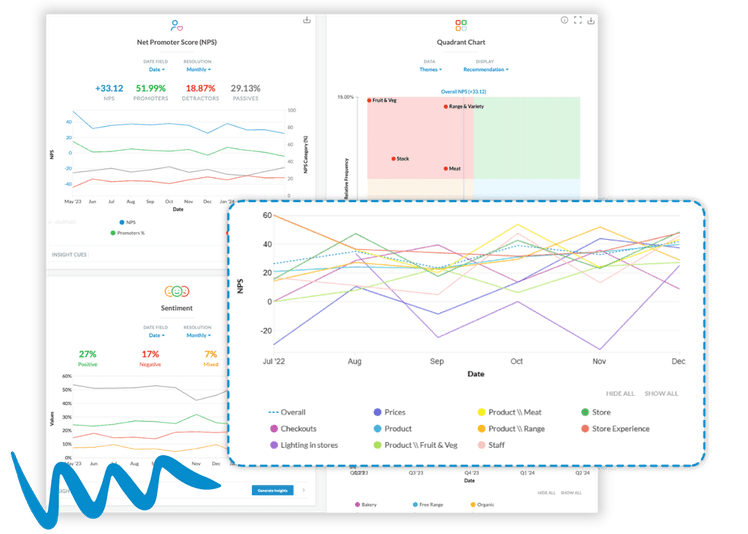
Customer Segmentation: AI can group customers into segments based on their behaviour and preferences. This means you can tailor your marketing efforts to different segments, ensuring that each group gets the most relevant and engaging content. By analyzing real-time customer behavior, AI helps you quickly adapt to shifting customer preferences, enhancing your decision-making and competitive advantage.
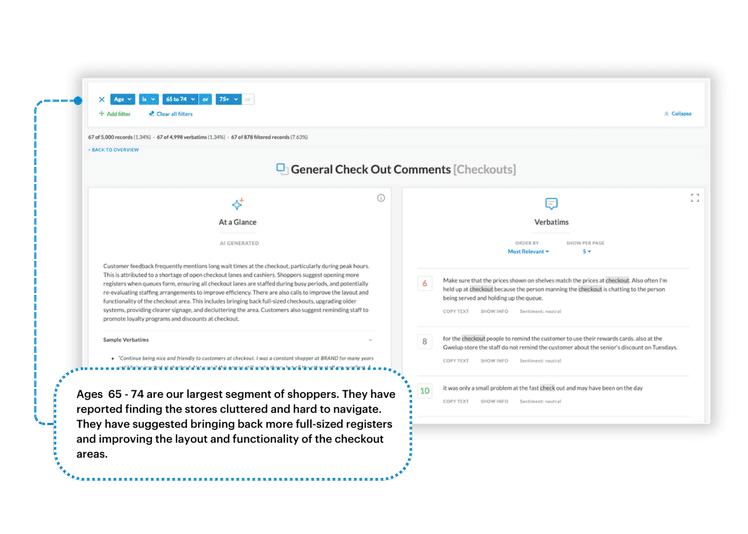
Personalization: Today’s customers expect personalized experiences. AI can help you deliver just that by analyzing customer data to provide personalized recommendations and offers. This not only enhances the customer experience but also drives sales.
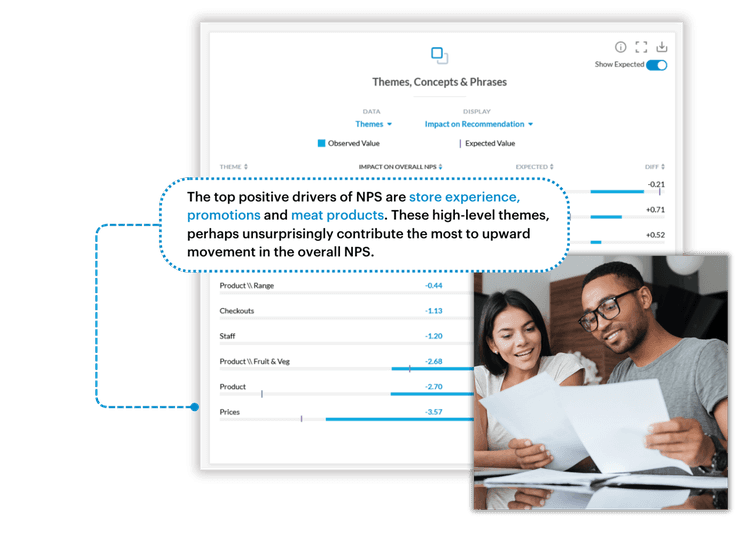
Customer Journey Mapping: AI can track and analyze the customer journey, highlighting key touch points and potential pain points. This helps you optimize the customer experience at every stage.