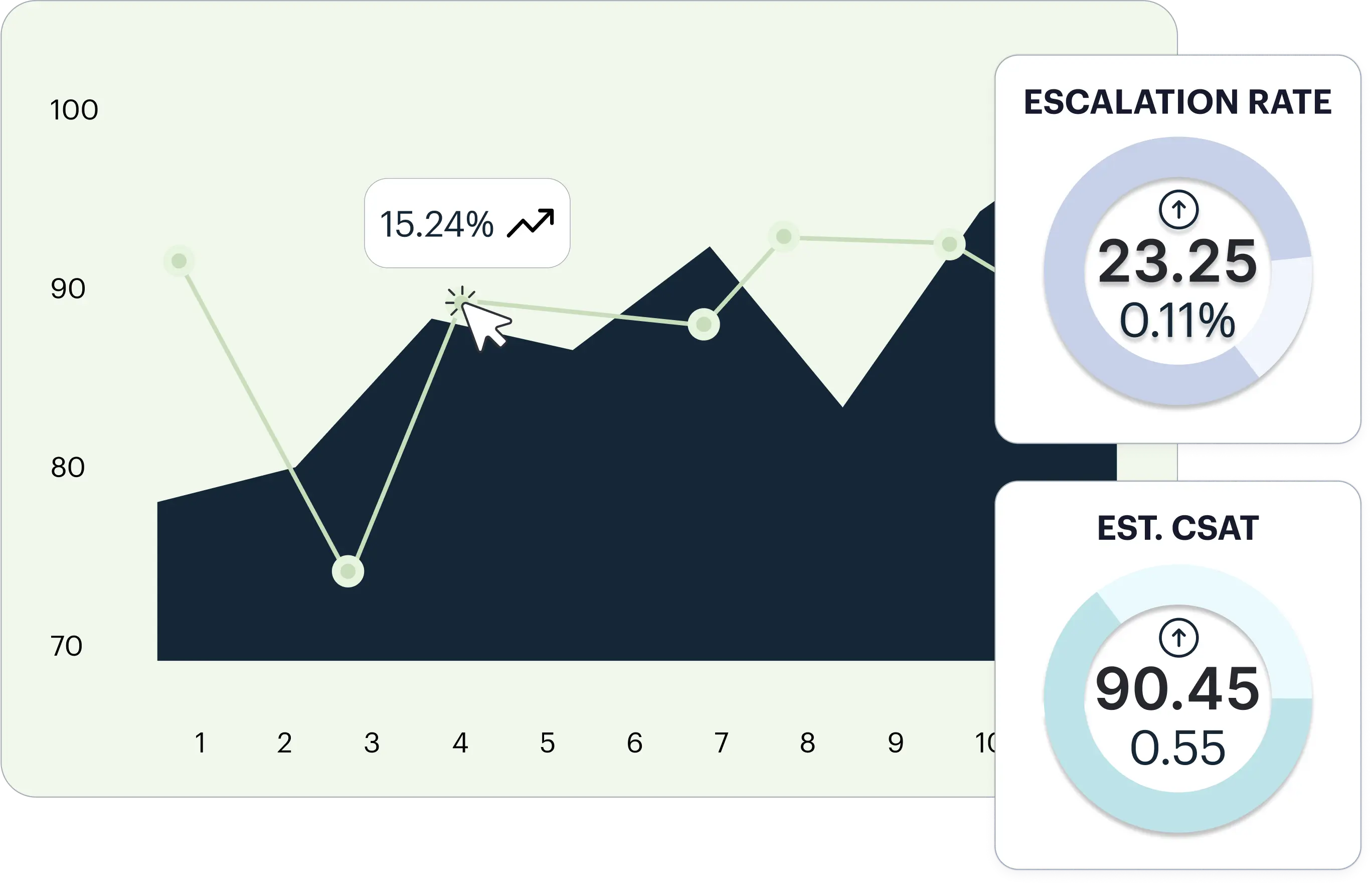
As a Head of Support, improving agent productivity is an ongoing priority.
Leadership wants better productivity numbers. Customers demand faster resolutions. But pushing harder on traditional metrics often backfires, creating a revolving door of talent that costs your organization thousands in turnover.
Classifying service issues with artificial intelligence (AI) and automatically routing incoming customer contacts can help increase agent productivity. But many organizations struggle with the false choice between productivity and agent well-being.
But you shouldn't have to choose. The most successful contact centers have found a way to boost productivity while keeping agents engaged and motivated.
In this article, we'll explore 15 actionable strategies that deliver on both fronts—helping your team work smarter, not just harder.

What is Agent Productivity?
Agent productivity isn't just about how many calls your team can handle in an hour. This is a common misconception that leads to the burnout epidemic plaguing contact centers worldwide.
True agent productivity is the sweet spot where efficiency meets effectiveness. It's about exceptional customer service delivery that resolves customer issues on the first contact, creates positive customer interactions, and drives meaningful business outcomes like improved customer satisfaction scores and increased customer retention.
When done right, improved agent productivity creates a virtuous cycle. Customer service agents feel more confident and capable. Customers receive better support. And your organization sees tangible results in key performance indicators like first contact resolution rates and customer experience metrics.
On the flipside, getting this wrong impacts everything from employee morale to customer experience, and ultimately your bottom line. High turnover, declining customer satisfaction, and increased average handle time can cost your organization thousands per agent while damaging your brand reputation.
15 Tips to Improve Agent Productivity Without Burnout
Tip 1: Implement AI-Powered Quality Assurance for 100% Coverage
Traditional QA programs only review 1-5% of customer interactions, leaving massive blind spots in understanding agent performance. This creates frustration for agents who can feel unfairly judged based on limited samples.
AI-powered QA transforms this by analyzing every single call, chat, and email interaction. Instead of waiting weeks for feedback, agents receive immediate, specific coaching recommendations after each interaction.
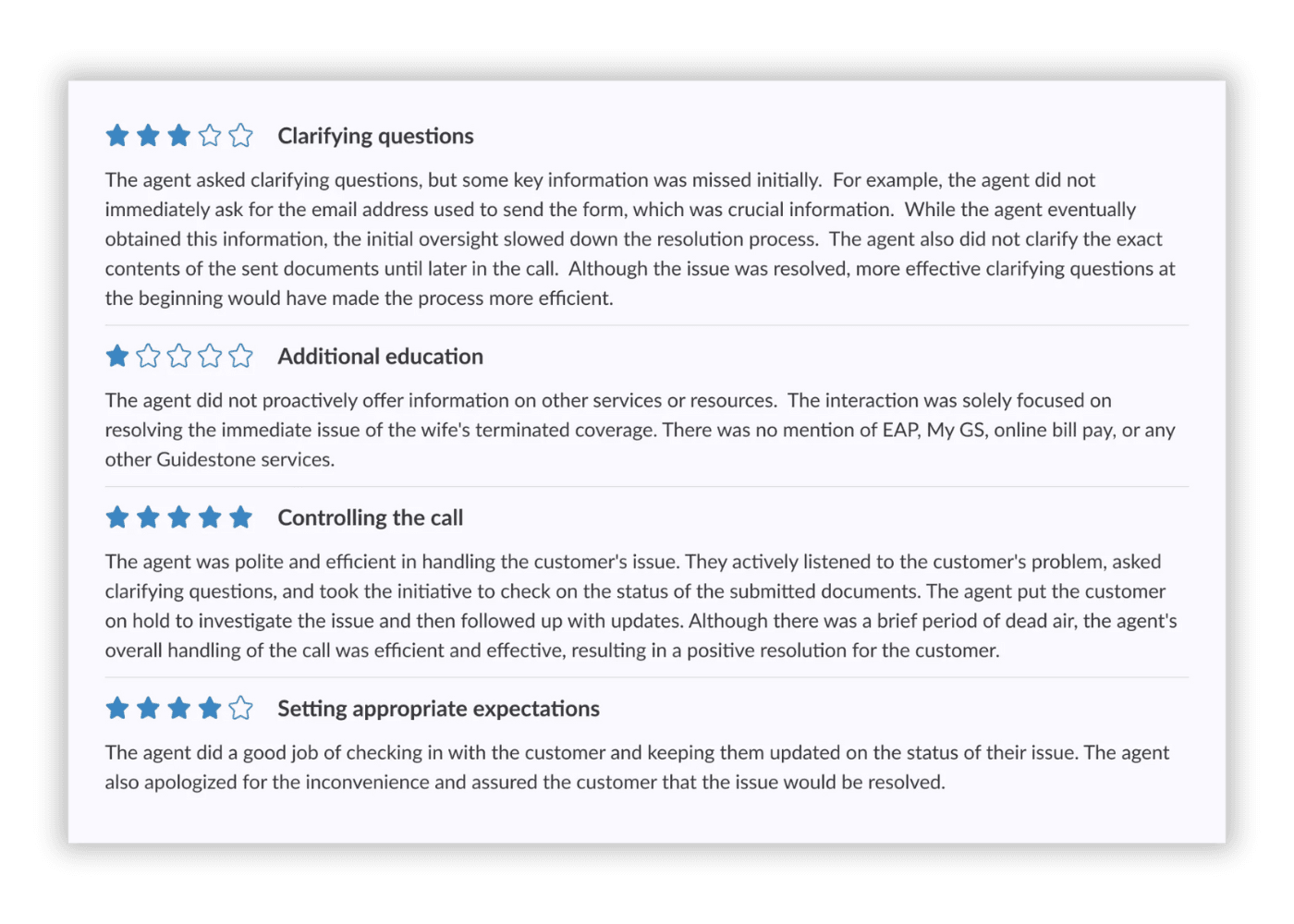
How Kapiche helps: Our Agent QA scorecard feature provides detailed performance scoring across your selected metrics for every interaction. The system generates specific feedback like "Call Control/Monopolizing the Conversation: The agent frequently interrupted the member and dominated the conversation," along with actionable improvement suggestions.
Key benefits:
Agents receive fair, comprehensive feedback based on all interactions
Managers can identify training needs across the entire team
Customer service quality improves through consistent coaching
Tip 2: Focus on First Contact Resolution (FCR) Over Speed
First contact resolution is one of the strongest predictors of customer satisfaction and agent confidence. When agents can fully resolve customer issues on the first interaction, it creates a win-win scenario.
Rather than pushing agents to rush through calls, train them to ask the right questions, access the right information, and take the time needed to solve problems completely. This approach actually improves agent efficiency by reducing repeat contacts and escalations.
Implementation strategy:
Set first contact resolution targets (aim for 80%+)
Provide agents with comprehensive knowledge bases
Reward quality resolutions over quick call times
Tip 3: Provide Real-Time Coaching and Feedback
Annual performance reviews are relics of the past. Contact center agents need immediate feedback to course-correct and build confidence in real-time.
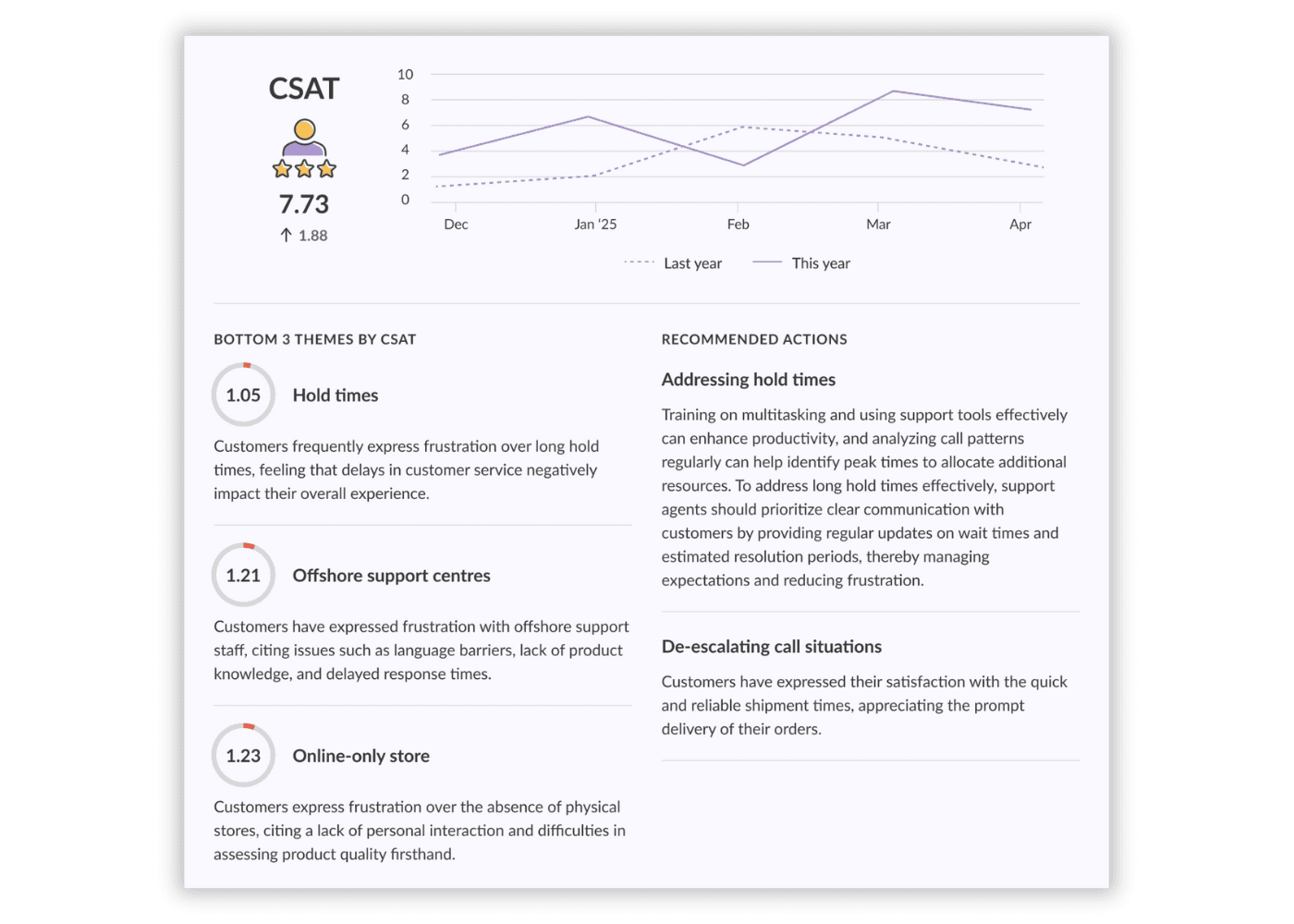
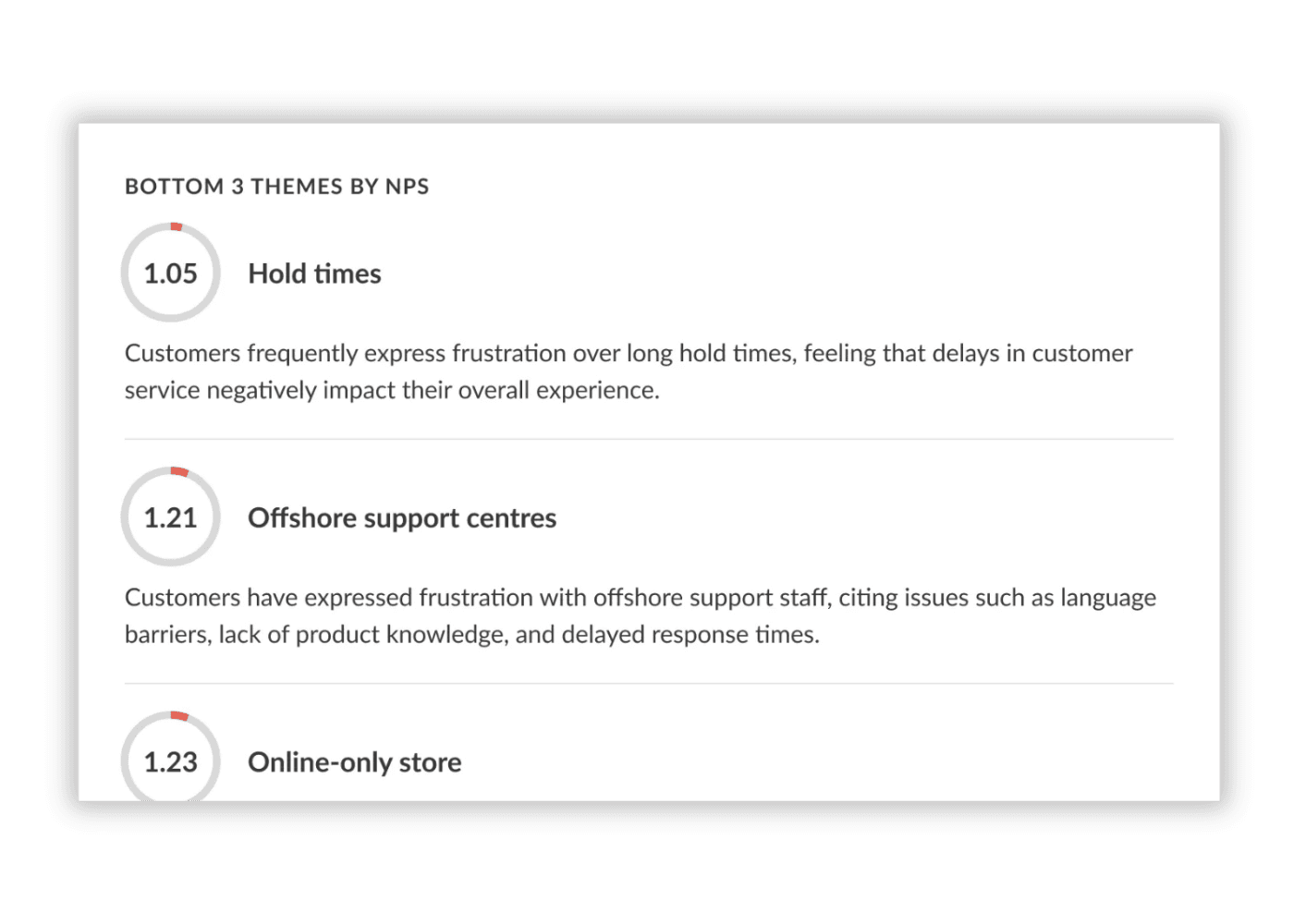
How Kapiche helps: Our CSAT overview feature shows CSAT trends over time and identifies the bottom 3 themes by CSAT with AI-generated recommended actions to fix issues. This allows managers to provide targeted coaching based on actual customer sentiment data.
Best practices:
Use real customer interactions as coaching opportunities
Focus on specific behaviors that impact customer experience
Celebrate wins immediately to reinforce positive performance
Tip 4: Leverage Predictive Analytics for Workload Management
Nothing burns out agents faster than unexpected volume spikes and poor staffing decisions. Predictive analytics help you anticipate demand and staff accordingly.
Smart scheduling benefits:
Prevents agent overload during peak periods
Ensures adequate coverage for customer inquiries
Reduces stress through better work-life balance
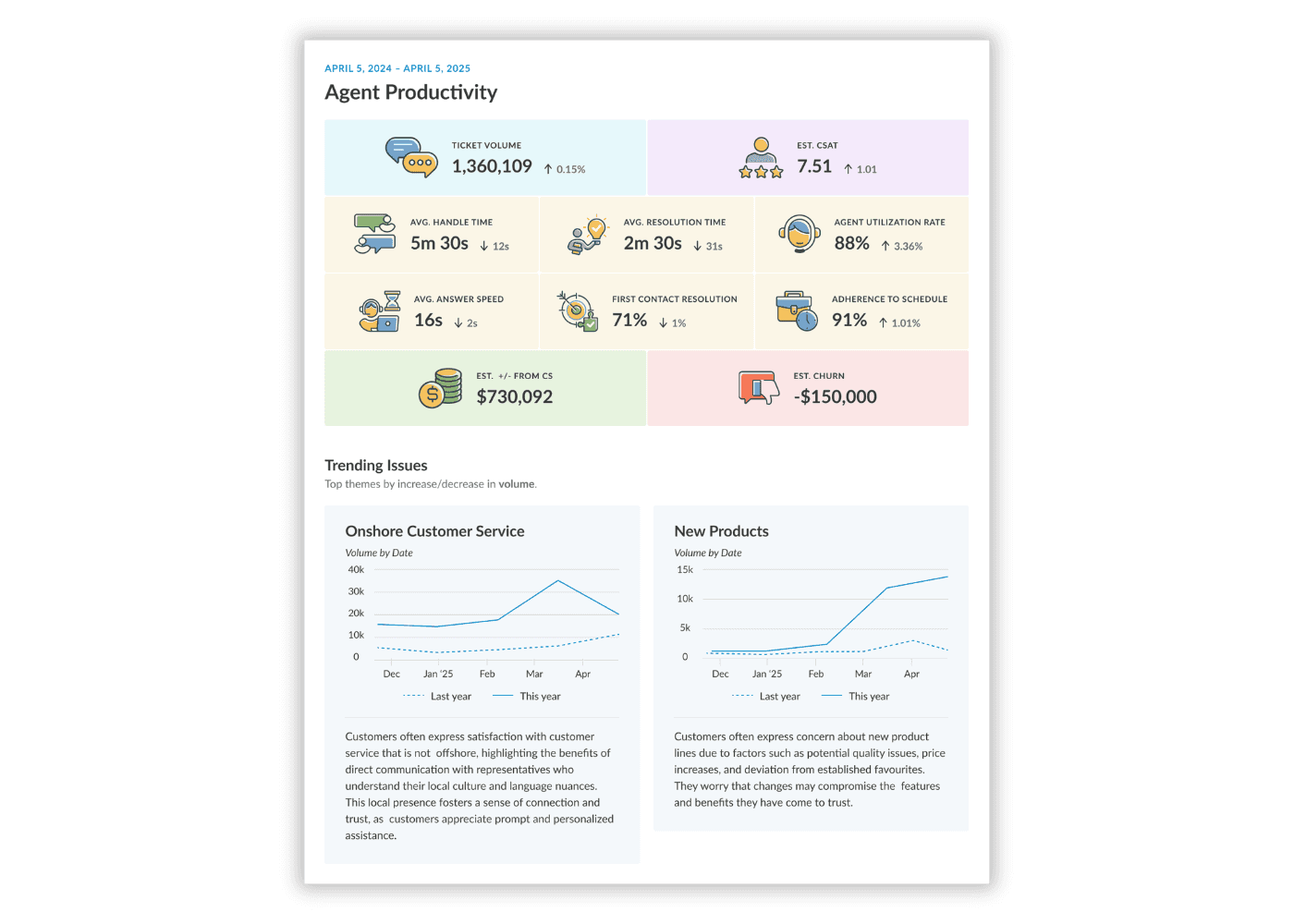
How Kapiche helps: Our Agent productivity report provides key metrics to identify patterns in customer calls and agent workload, enabling proactive scheduling decisions.
Tip 5: Automate Routine Administrative Tasks
Administrative work is the silent productivity killer. When agents spend time on manual data entry and paperwork, they're not helping customers.
Automation opportunities:
Automatic call categorization and tagging
Post-call wrap-up summaries
Customer data updates
How Kapiche helps: Our platform automatically categorizes and analyzes customer interactions, eliminating manual coding and providing instant insights through automated AI summaries.
Impact: Agents can focus on high-value customer service activities rather than administrative tasks.
Tip 6: Create Intelligent Knowledge Management Systems
When agents can't find information quickly, average handle time increases and frustration mounts. Intelligent knowledge systems provide context-aware information exactly when needed.
Features to implement:
Real-time article suggestions based on customer queries
Integration with customer service software
Regular content updates based on emerging issues
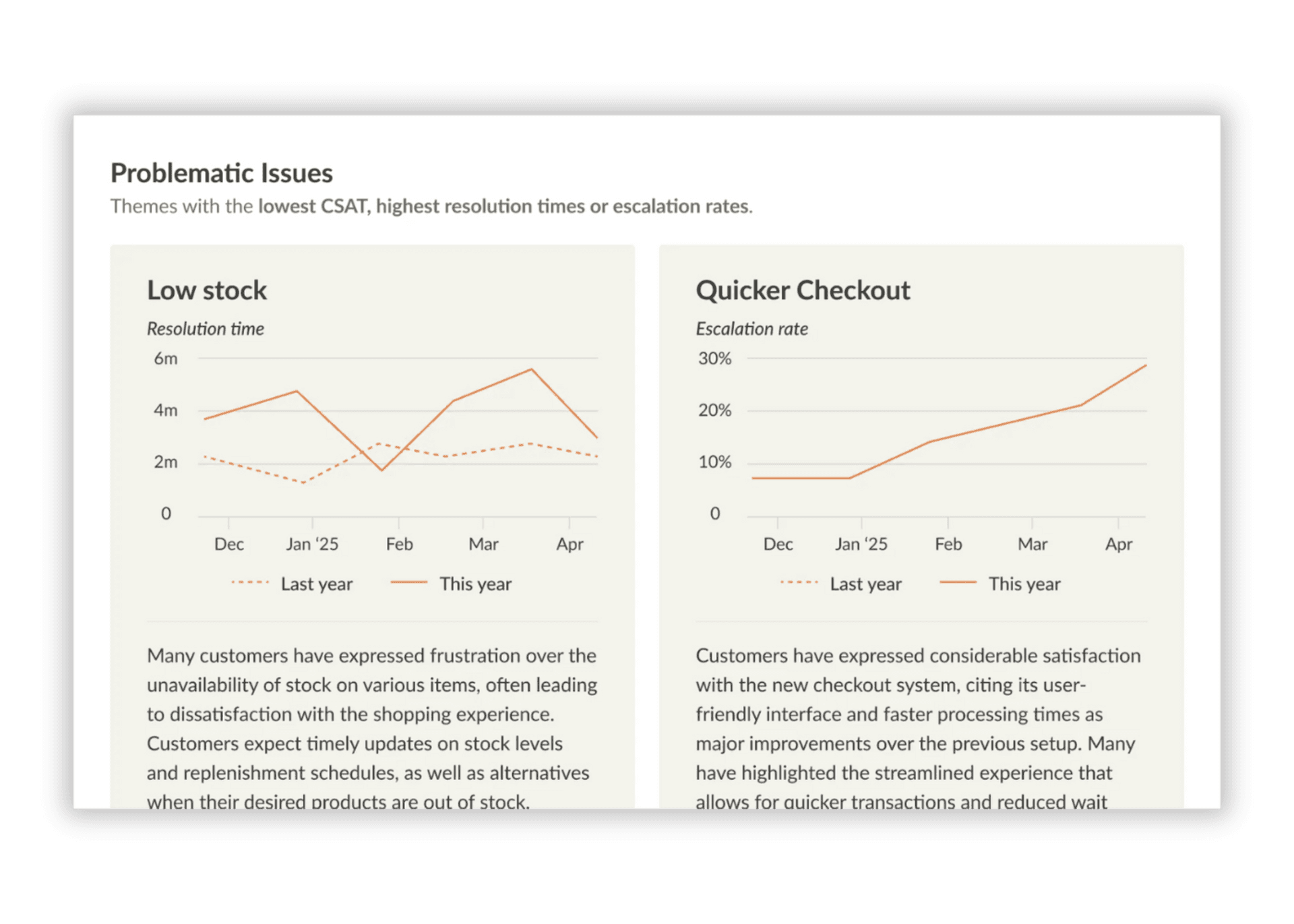
How Kapiche helps: Our Issue Outliers feature identifies emerging problems and trending topics, helping you update knowledge bases proactively before they impact agent performance.
Tip 7: Implement Skills-Based Routing
Matching the right agent to the right customer reduces resolution time and improves customer satisfaction. Skills-based routing ensures customer inquiries reach agents with relevant expertise.
Routing criteria:
Technical expertise levels
Language capabilities
Product specializations
Customer segment experience
Benefits:
Higher first contact resolution rates
Improved agent confidence
Better customer experience
Tip 8: Develop Self-Service Options Based on Call Data
Nearly two-thirds of customer service tasks and up to 70% of contacts can be automated with an AI-powered omnichannel contact center solution. The key is knowing which issues customers can handle themselves.
How Kapiche helps: Our Bottom 3 feature identifies the most common issues affecting customer satisfaction. Use this data to create targeted self-service options that address frequent customer concerns before they require agent intervention.
Tip 9: Use Data to Identify and Eliminate Process Bottlenecks
Hidden inefficiencies in your processes create unnecessary friction for both agents and customers. Data-driven analysis reveals these bottlenecks.
How Kapiche helps: Our Outlier theme detection identifies unusual spikes in specific issues. When resolution times suddenly increase for certain topics, you can investigate and fix underlying process problems.
Common bottlenecks:
Complex approval processes
System integration issues
Information access problems
Tip 10: Establish Clear Performance Metrics That Matter
Traditional metrics like average handle time can encourage rushed interactions. Focus on key performance indicators that align with customer service goals.
Balanced scorecard approach:
Customer satisfaction scores
First contact resolution rates
Net promoter score from interactions
Agent engagement metrics
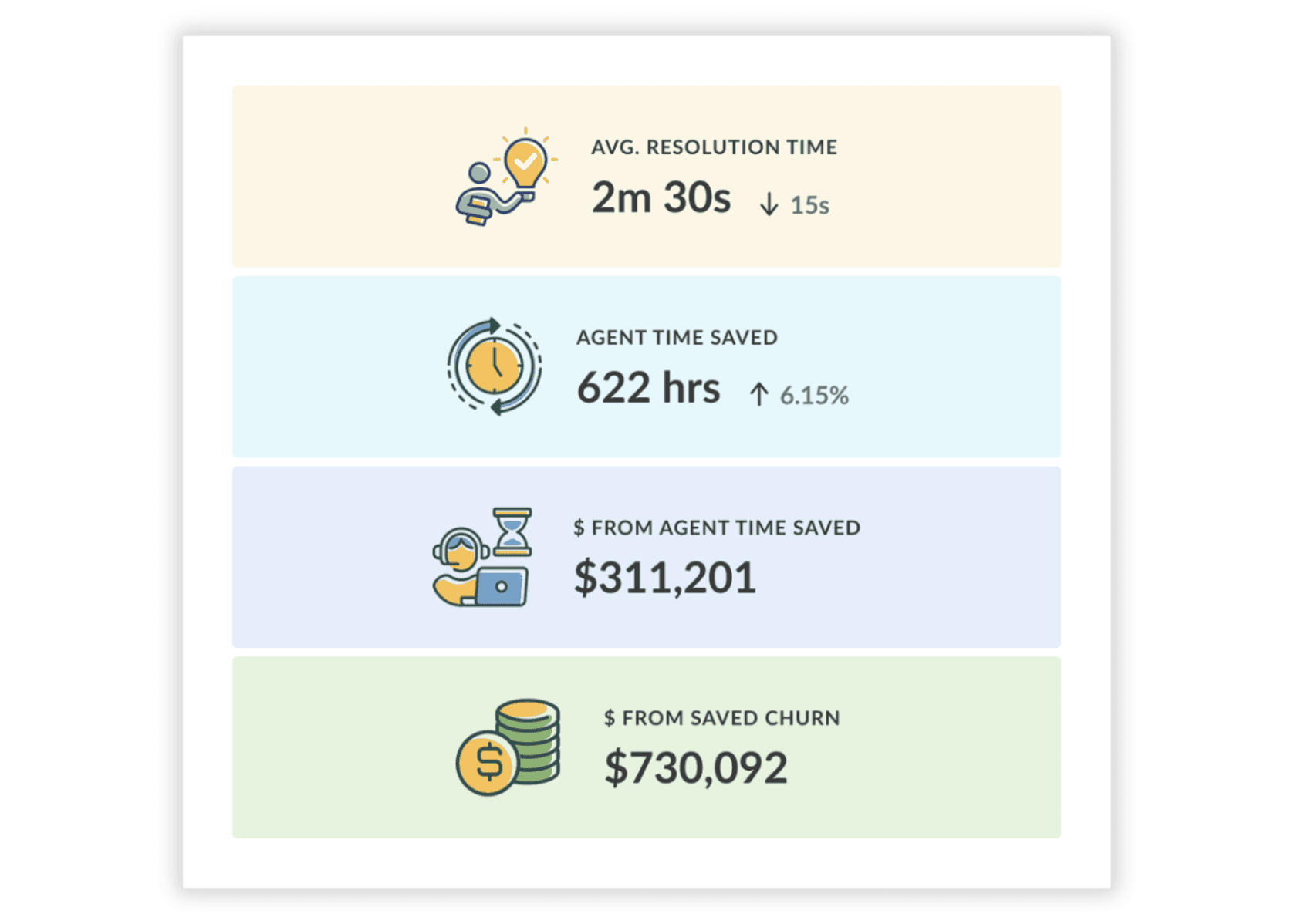
How Kapiche helps: Our Metric Statistics View provides customizable widgets with your most important quantitative metrics, giving managers a complete view of performance.
Tip 11: Provide Targeted Training Based on Real Performance Data
Generic training programs waste time and resources. Data-driven training addresses specific skill gaps identified through actual customer interactions.
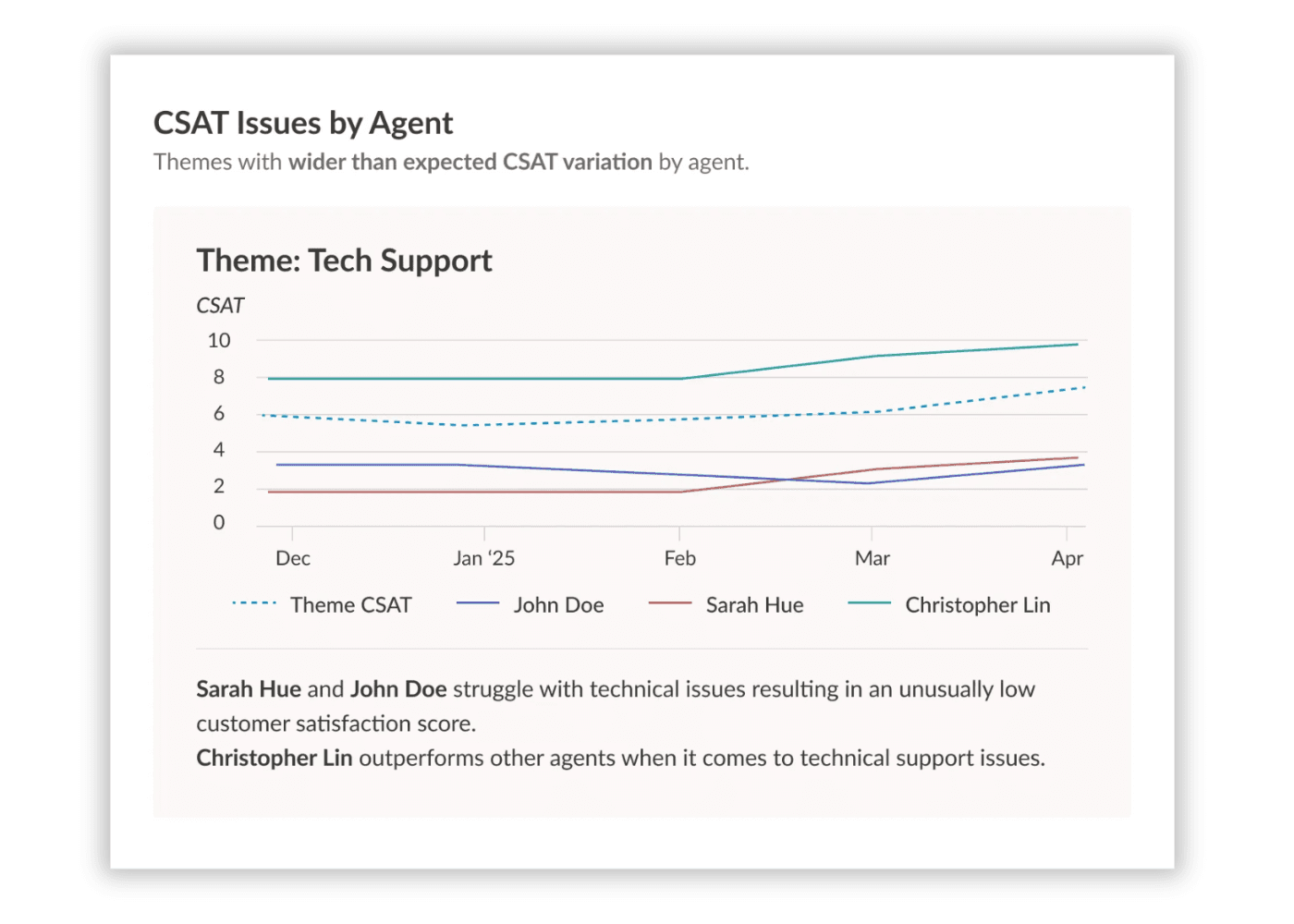
How Kapiche helps: Our Theme Outlier by Agent feature shows CSAT variations by agent for specific themes, identifying exactly who needs training in which areas. AI-generated summaries highlight specific examples of both successful and problematic interactions.
Training focus areas:
Communication channels best practices
Product knowledge gaps
Soft skills development
Technical competencies
Tip 12: Create Flexible Work Arrangements
52% of consumers state that support interactions leave them exhausted, and 55% feel increasingly stressed. If customers feel this way, imagine how agents feel handling these interactions all day!
Flexible work arrangements improve agent wellbeing and can actually boost agent productivity.
Flexibility options:
Remote work capabilities
Flexible scheduling
Job sharing arrangements
Mental health support
Benefits:
Reduced commute stress
Better work-life balance
Lower turnover rates
Tip 13: Monitor Agent Sentiment and Wellbeing
Customer concerns aren't the only sentiment you should track. Agent sentiment provides early warning signs of burnout and engagement issues.
How Kapiche helps: While our platform primarily analyzes customer interactions, the insights about difficult customer issues and challenging themes help managers understand which situations create stress for agents.
Monitoring strategies:
Regular pulse surveys
One-on-one check-ins
Performance trend analysis
Workload distribution monitoring
Tip 14: Implement Cross-Training Programs
Cross-training creates more capable, confident agents while providing backup coverage during peak periods or absences.
Cross-training benefits:
Skill diversification reduces monotony
Career development opportunities
Better team flexibility
Reduced dependency on specific individuals
How Kapiche helps: Our Agent Overview report shows performance across different interaction types, helping identify agents who would benefit from or excel at cross-training opportunities.
Tip 15: Use Customer Feedback to Drive Process Improvements
This is where VoC 2.0 comes into play. Every customer interaction contains valuable insights about your processes, products, and service delivery.
How Kapiche helps: Our comprehensive customer feedback analysis turns every call, chat, and email into actionable intelligence. Instead of waiting for survey responses, you get real-time insights from actual customer conversations.
Process improvement cycle:
Analyze 100% of customer interactions
Identify recurring customer issues
Implement targeted improvements
Measure impact on customer satisfaction