Imagine this: You're the Head of CX, and churn is creeping up. You have a QA team of three analysts doing their best — working through a backlog of recorded calls, scoring maybe 2-3% of total volume each month. The rest? Untouched.
You know there's a pattern buried in those conversations. A billing frustration, a recurring product complaint, a competitor being mentioned more than it used to be. But with 50,000 calls a month and three humans, you're making strategic decisions based on what amounts to a rounding error in your data.
So you sign off on a $50,000 investment in a conversation intelligence platform. Problem solved, right?
Not necessarily. Because not all conversation intelligence platforms are created equal — and choosing the wrong one can leave you with a shinier version of the same problem.
Research from the Aberdeen Group shows that contact centers using conversation intelligence see 76% first-call resolution rates compared to just 23% for those without it, while reducing QA costs by up to 90% through automated analysis. But those results only materialize when the platform is actually built for CX and support teams — not bolted together for a different buyer entirely.
But here's the critical nuance most software reviews miss: not all conversation intelligence platforms are built for the same buyer.
The term used to mean sales-focused software designed to analyze revenue conversations like demos and closing calls (platforms like Gong and Chorus.ai). However, newer platforms have emerged specifically for the CX and support space. These tools understand customer conversations across every channel, including support calls, live chat, email, social media, and surveys.
This guide focuses exclusively on that second category: platforms built for customer experience and support teams, not sales intelligence tools.
You get real value by turning scattered customer interactions into centralized business intelligence. But that only happens if you choose a solution that actually covers all your conversations across all channels, not just a random sample of voice calls.
Table of Contents
What is a Conversation Intelligence Platform?
Why Conversation Intelligence Platforms Matter for CX Leaders
10 Best Conversation Intelligence Platforms in 2026
How to Choose the Right Conversation Intelligence Platform
Getting Started: Implementation Best Practices
FAQs
What is a Conversation Intelligence Platform?
A conversation intelligence platform uses artificial intelligence and natural language processing to automatically analyze customer interactions across phone, chat, email, and other channels. It extracts insights about customer sentiment, agent performance, emerging issues, and business opportunities from 100% of conversations.
Clearing Up Misconceptions
It's not just call recording or transcription. The best conversation intelligence software goes deeper. It understands the data, identifies why a customer is calling, how they feel, and what the business outcome should be without human intervention.
It's also distinct from traditional speech analytics. Legacy tools typically rely on sampling (analyzing just 1-5% of calls) or rigid keyword searches. Modern conversation intelligence software analyzes 100% of interactions across all channels and uses unsupervised AI to surface themes you didn't even know existed.
Finally, there's a vital distinction between CX/Support platforms and Sales platforms. Sales conversation intelligence software (like Gong or Chorus) focuses on revenue teams. CX conversation intelligence software (like Kapiche) focuses on the customer journey: understanding support friction, identifying product defects, automating quality assurance, and preventing churn.
Why It Matters for Business
The right conversation intelligence platform transforms your support function from a cost center into a strategic intelligence hub. Support conversations are goldmines for upsell opportunities — the right platform identifies moments when customers are ready to expand their usage. And customers rarely leave without warning; they drop hints in support tickets, chat logs, and calls that AI can detect long before a cancellation request arrives.
By automating QA scores for 100% of conversations, you can reduce operational costs by 70-90% while improving compliance and service consistency. Agents get objective feedback based on their entire body of work — not just the one call a manager happened to pull. And your support team hears about product bugs and feature requests weeks before they show up in survey data.
Why Conversation Intelligence Platforms Matter for CX Leaders
For a CX leader, every decision must connect back to business outcomes. A conversation intelligence platform isn't just an operational tool. It's a strategic asset that directly impacts the metrics you're measured on.
Transform Survey Limitations into Complete Customer Understanding
Here's a hard truth: surveys lie to you.
Survey response rates hover around 5-7%. That means you're making strategic decisions based on what 5% of customer interactions tell you, while ignoring 95%. This isn't a data gap. It's a strategic blind spot.
Conversation intelligence solutions provide 100% coverage of customer interactions. For example, one financial services company celebrated their 85% CSAT score. Wrong. Conversation analysis revealed that 40% of customers mentioned severe frustration with the billing process in their support calls, preventing an estimated $2.3M in churn.
Reduce Churn Through Predictive Intelligence
The traditional approach to churn is reactive. You wait for satisfaction scores to drop, then try to understand why. By then, it's too late.
A modern conversation intelligence software makes churn prevention proactive. It detects early warning signals (frustration, competitor mentions, pricing concerns) long before a customer decides to leave. Companies using conversation intelligence reduce customer churn by 15-25% through early intervention.
Maximize Agent Performance with Complete QA Coverage
Manual quality assurance is broken. Reviewing just 1-5% of agent interactions takes weeks and delivers biased feedback.
Conversation intelligence automates the evaluation of 100% of conversation data. This reduces QA operational costs by 70-90% and transforms agent development. Instead of quarterly reviews, agents receive daily coaching moments based on their complete performance.
Prove ROI to Executive Leadership
Every CX leader faces proving financial impact. Conversation intelligence links insights from customer conversations directly to revenue metrics like customer lifetime value (CLV), churn rate, and Net Promoter Score.
Automated executive dashboards quantify the platform's value: cost savings from automated QA, revenue protected through churn prevention, and efficiency gains. Most organizations see positive ROI within three to six months.
10 Best Conversation Intelligence Platforms in 2026
The conversation intelligence market has matured significantly, but not all platforms are created equal. Some are essentially call recording tools with basic transcription, while others offer complete cross-channel coverage with predictive AI.
This guide focuses exclusively on platforms built for customer-facing support operations and CX strategy.
Selection Criteria
We've evaluated these platforms based on six critical criteria:
Conversation Coverage: 100% analysis or sampling (1-5% of calls)?
Channel Support: Voice-only or true omnichannel?
AI Capabilities: Unsupervised learning or manual keyword lists?
Integration Ecosystem: Connections with help desk, CRM, and contact center tools?
Pricing Model: Scalable for high-volume support teams?
Time to Value: Weeks or months to actionable insights?
1. Kapiche: AI-Powered Qualitative Analysis with Complete Conversation Coverage
Positioning Statement: Kapiche stands apart as the only conversation intelligence platform purpose-built for qualitative customer feedback analysis across all channels, offering 100% conversation coverage and unified insights from support calls, chat, email, surveys, and social media.
Core Functionality
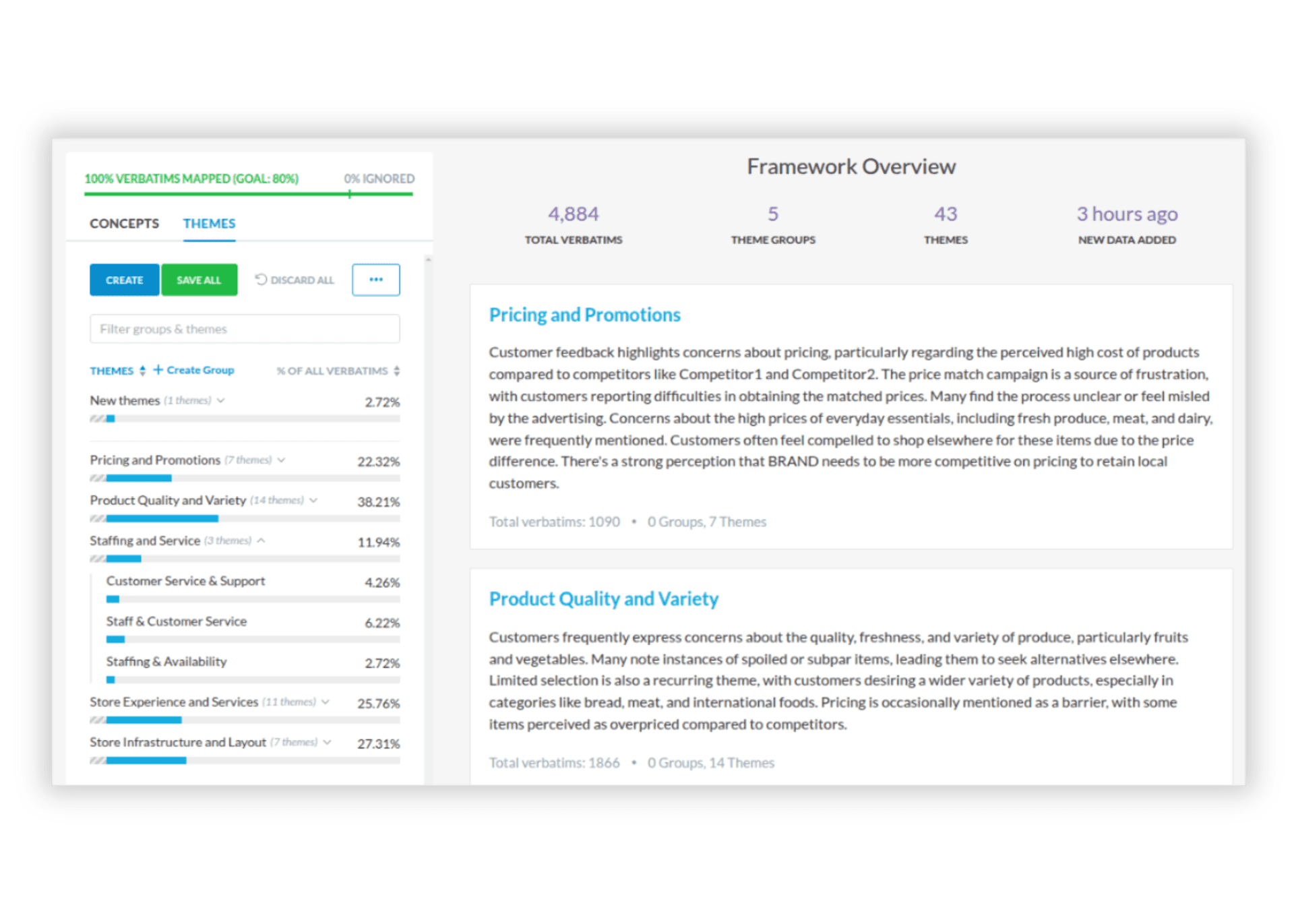
Kapiche transforms how CX teams understand customer conversations by analyzing 100% of call interactions, not just a sampled subset. While traditional platforms sample only 1-5% of conversations, Kapiche's AI engine ingests every customer touchpoint across your ecosystem, automatically detecting themes, sentiment, and emerging issues in real-time.
What sets Kapiche apart is its advanced qualitative analysis engine. Originally designed for analyzing open-ended survey responses, this technology extends to all conversation types. Unlike legacy systems requiring pre-configured keywords, Kapiche uses unsupervised learning, adapting to your customers' actual language and surfacing unexpected pain points that keyword-based systems miss.
Implementation takes weeks, not months, with pre-built integrations for major support platforms and intuitive workflows requiring no technical expertise.
Key Features & Benefits
100% Conversation Coverage: Analyze every customer interaction across voice, chat, email, and surveys
Cross-Channel Unification: Single source of truth combining support conversations, survey feedback, social mentions, and review data
AI Theme Detection: Automatically identifies emerging issues without keyword configuration
Journey Segment Enrichment: Connects conversation patterns to customer lifecycle stages
Executive Reporting: Automated dashboards linking conversation insights to revenue metrics and CX KPIs
Real-Time Intelligence: Detect escalating issues before they become widespread problems
Best Fit: Ideal for CX and Support leaders in mid-market to enterprise organizations needing strategic customer intelligence across all channels. Strong for companies that have outgrown survey-based insights.
2. Dialpad AI: Real-Time Intelligence for Support Teams
Positioning Statement: Dialpad AI integrates conversation intelligence directly into a cloud contact center platform, prioritizing real-time agent assistance and operational efficiency.
Core Functionality
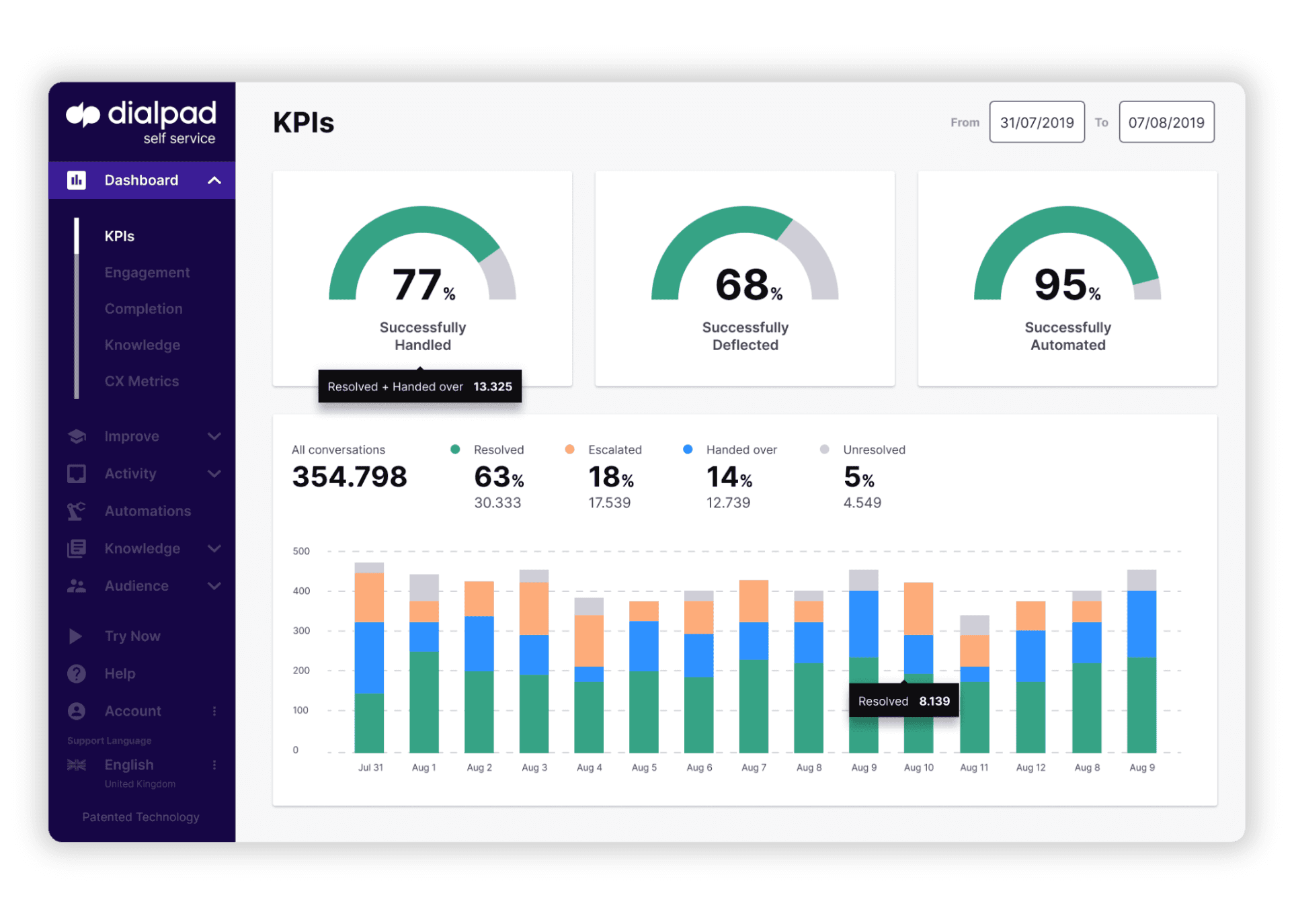
Dialpad AI combines contact center infrastructure with built-in intelligence, focusing on live interactions. It provides real-time transcription and sentiment analysis, surfacing "Agent Assist" cards that guide support staff while the customer is on the line.
The platform excels at operational speed, listening for triggers and instantly popping up recommended responses. However, analysis is primarily voice-focused with more limited cross-channel capabilities.
Key Features & Benefits
Real-time transcription and sentiment analysis
Live agent assist cards with recommended responses
Automated post-call summaries
CSAT prediction and quality scoring
Custom moment tracking for compliance
Best Fit: Best for mid-sized support teams (50-500 agents) prioritizing real-time agent guidance over deep strategic analysis.
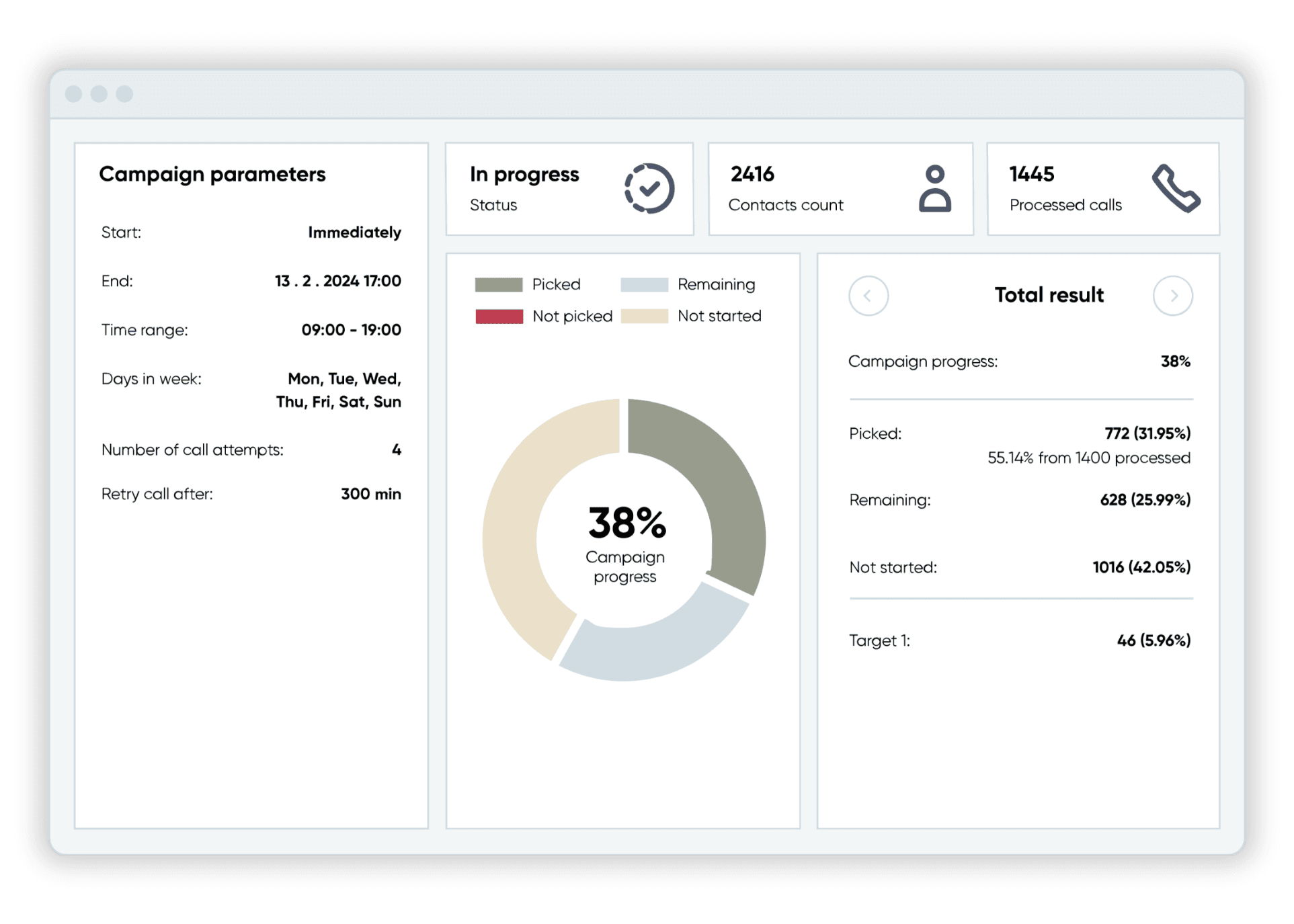
3. CallMiner: Enterprise Conversation Analytics for Contact Centers
Positioning Statement: CallMiner offers enterprise-grade conversation analytics with a strong focus on compliance, quality management, and contact center operations.
Core Functionality
CallMiner is built for organizations where risk mitigation and compliance are primary drivers. It provides deep speech and text analytics for large contact centers. The platform's core strength lies in enforcing compliance. However, this depth comes with complexity, requiring dedicated analysts to maintain extensive categories and rules.
Key Features & Benefits
Omnichannel analytics (voice, chat, email, social)
Rigorous compliance and regulatory monitoring
Emotion and sentiment analysis
Automated quality scoring for 100% of interactions
Best Fit: Best for large enterprises (1000+ agents) in heavily regulated industries like banking, insurance, and healthcare.
4. NICE Enlighten AI: Workforce Optimization Suite
Positioning Statement: NICE Enlighten AI combines conversation intelligence with workforce management, quality management, and performance optimization.
Core Functionality
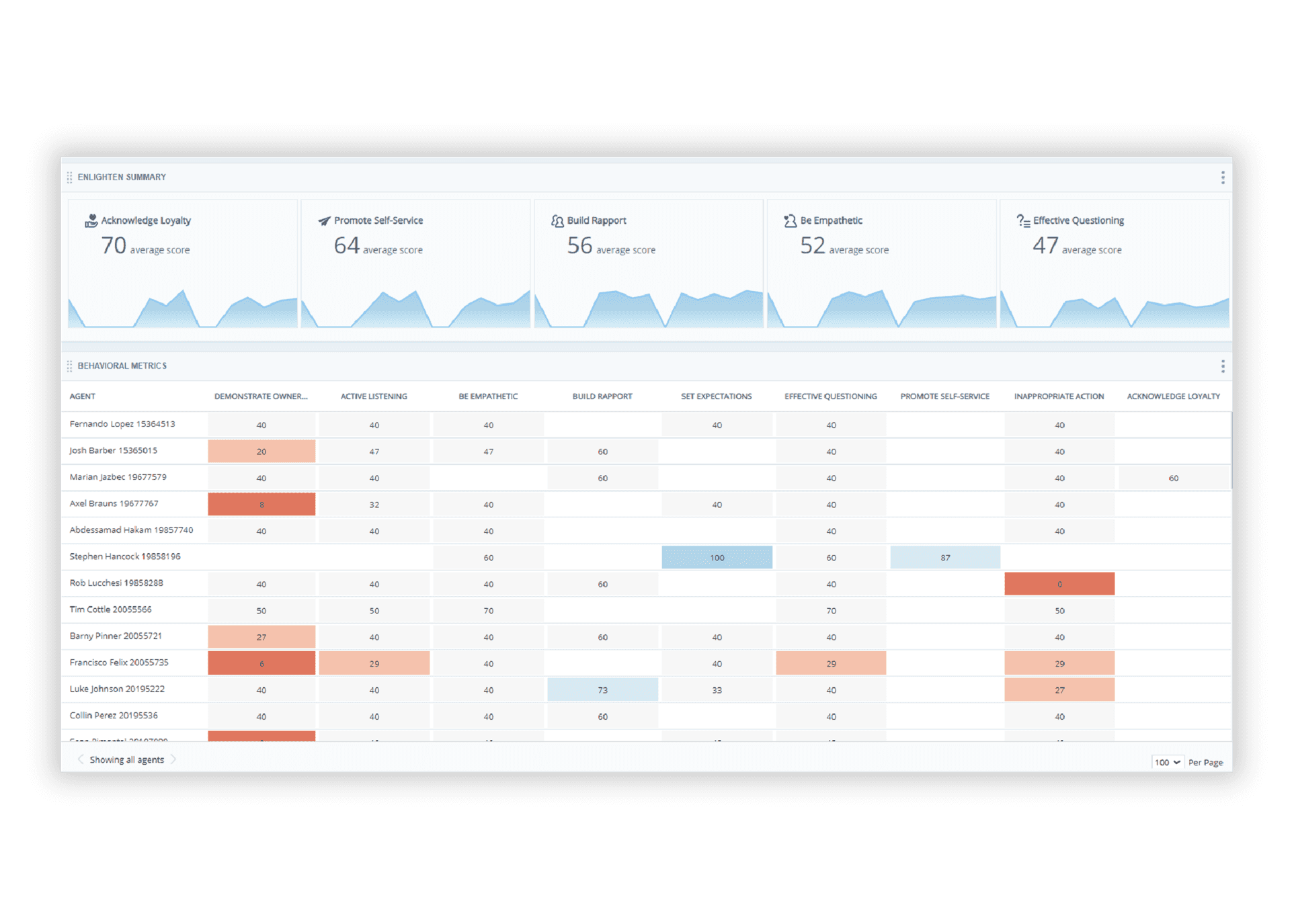
NICE Enlighten AI is deeply woven into workforce optimization within the broader NICE CXone ecosystem. It uses purpose-built AI models to measure agent soft skills like empathy alongside traditional metrics. However, this comprehensive power comes with significant complexity requiring dedicated resources.
Key Features & Benefits
AI models trained to score soft skills like empathy
Integrated workforce management linking insights to scheduling
Automated quality evaluation for 100% of interactions
Real-time agent guidance
Best Fit: Best for large enterprises (500+ agents) already committed to the full NICE CXone ecosystem.
5. Tethr: Customer Feedback Analytics for CX Teams
Positioning Statement: Tethr analyzes conversations to predict churn and identify CX improvement opportunities, focusing heavily on customer effort.
Core Functionality
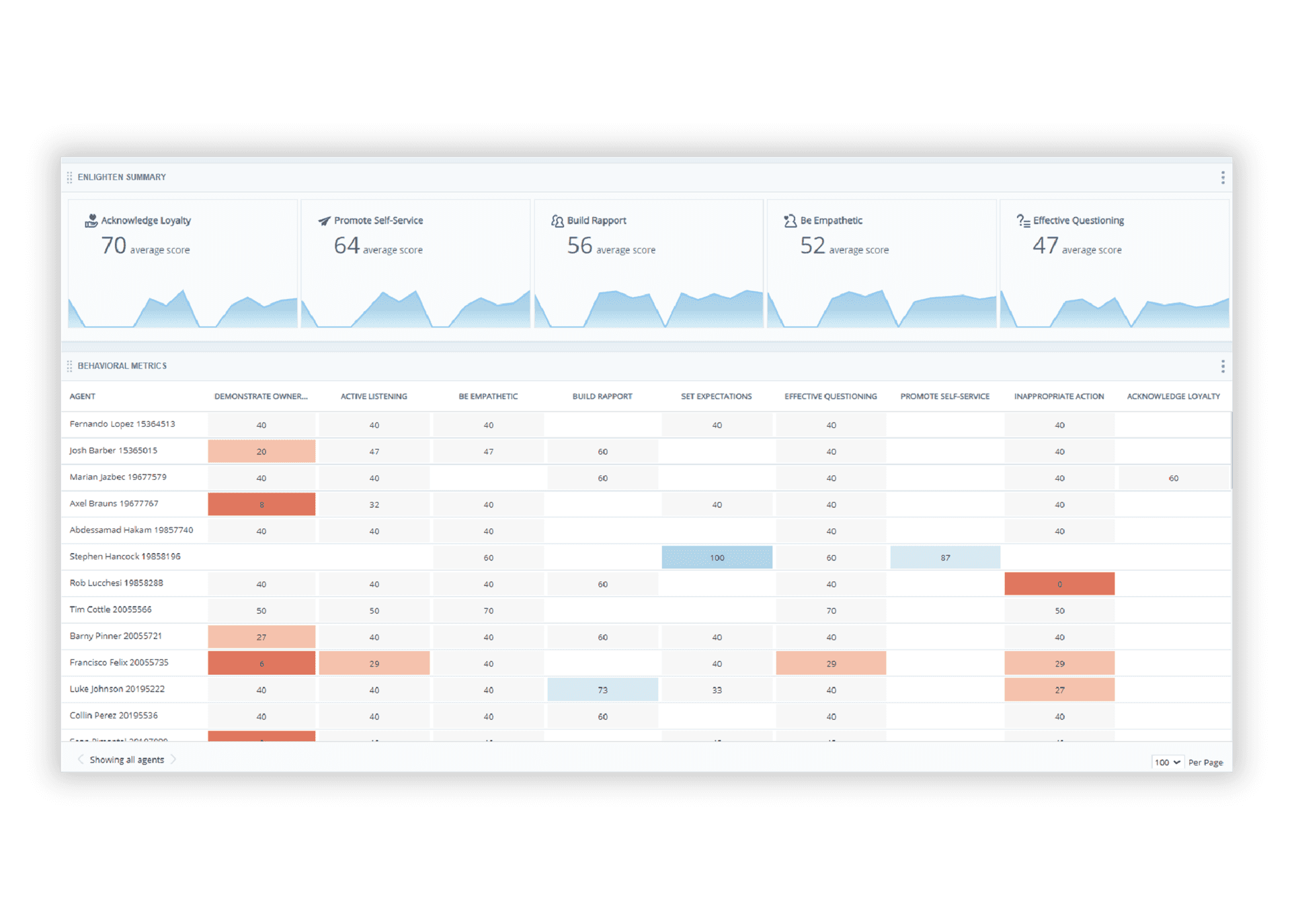
Tethr focuses on the "why" behind customer effort. The platform applies machine learning models to score interactions based on the effort required. However, Tethr's insights are often derived from statistical samples rather than 100% of interactions.
Key Features & Benefits
Customer effort score automation
Churn prediction models using machine learning
Emotion and sentiment analysis
CX metric correlation (NPS, CSAT drivers)
Best Fit: Excellent for CX teams laser-focused on customer retention and satisfaction metrics.
6. Observe.AI: Contact Center AI Platform
Positioning Statement: Observe.AI automates quality management to drive agent performance using 100% conversation analysis.
Core Functionality
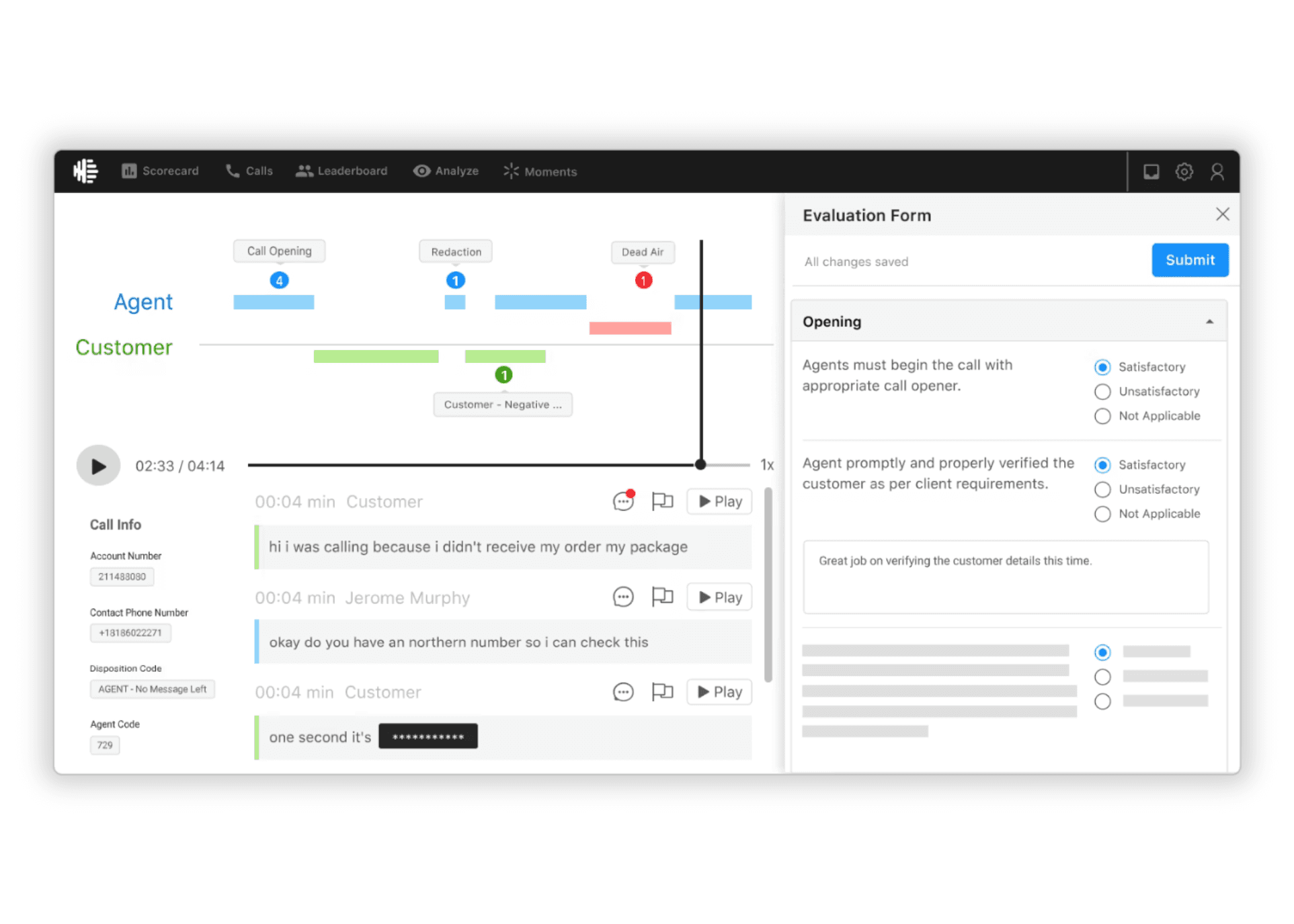
Observe.AI uses AI to evaluate 100% of interactions, automatically scoring agents on script adherence, empathy, and solution accuracy. When AI detects performance gaps, it triggers coaching workflows.
Key Features & Benefits
Automated quality scoring (100% coverage)
AI-powered coaching recommendations
Real-time agent assistance
Custom scorecard creation
Best Fit: Ideal for contact center operations leaders focused on QA automation and agent scaling.
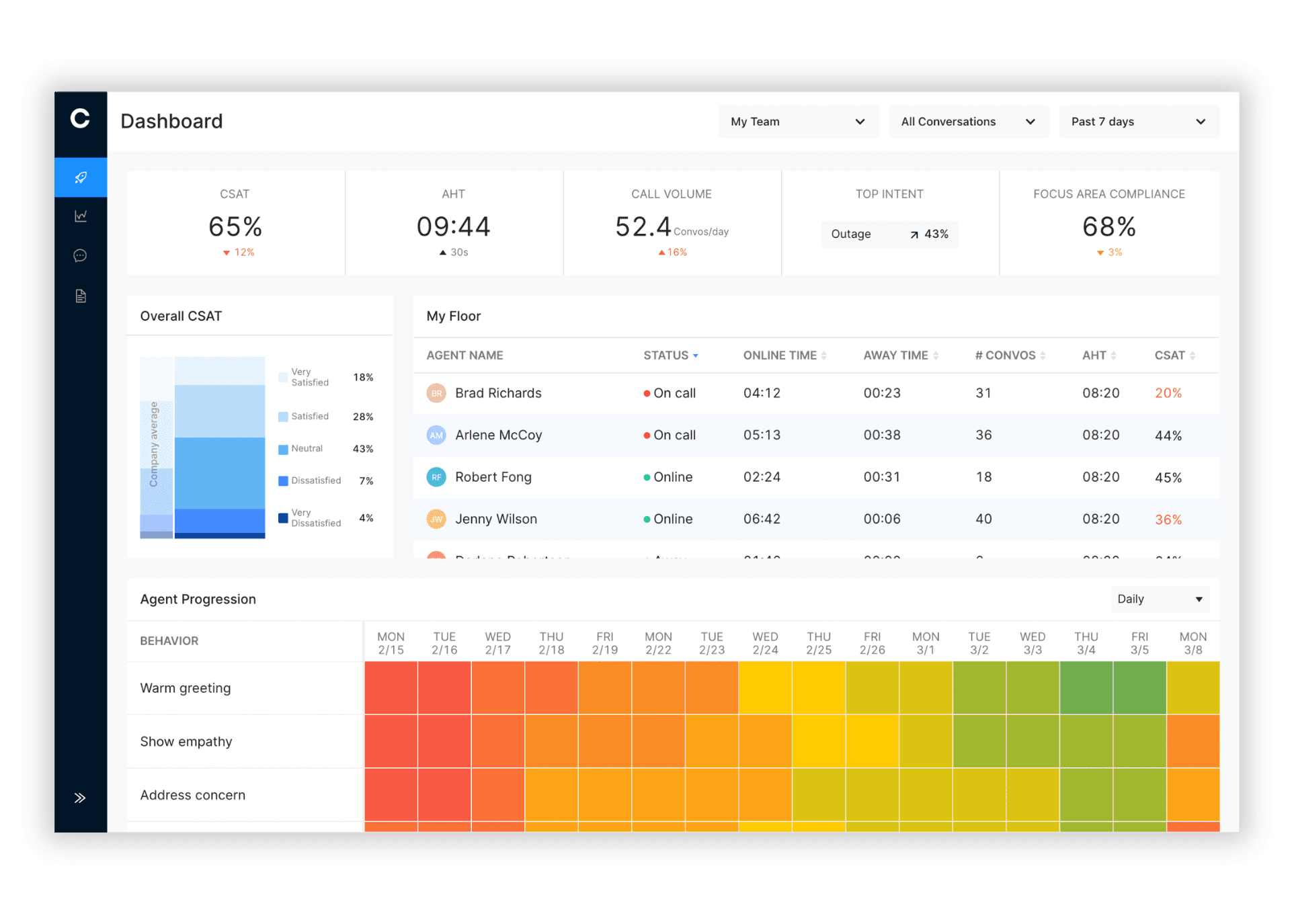
7. Cresta: Real-Time AI Agent Assistant
Positioning Statement: Cresta specializes in real-time conversation intelligence that guides agents during customer interactions.
Core Functionality
Cresta listens in real-time to help agents while customers are on the line. The platform identifies behaviors of top-performing agents and scales those insights through live prompts.
Key Features & Benefits
Real-time agent guidance during conversations
AI-powered knowledge base surfacing
Top performer behavior identification
Manager performance dashboards
Best Fit: Best for support teams (100-1,000 agents) focused on performance consistency and efficiency.
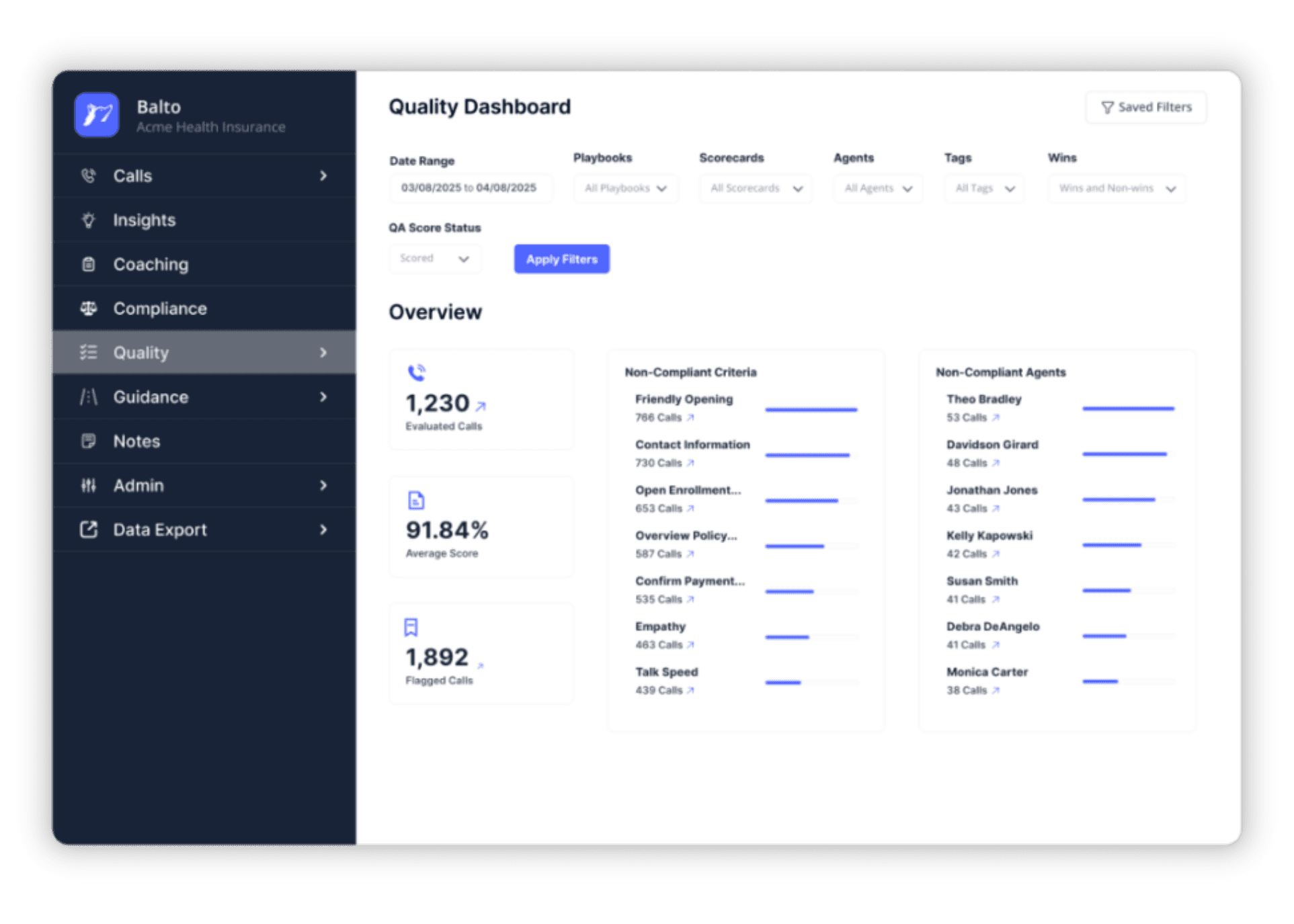
8. Balto: Real-Time Quality Assurance and Agent Guidance
Positioning Statement: Balto provides real-time agent guidance and quality assurance monitoring, focusing heavily on compliance.
Core Functionality
Balto's primary engine guides agents through conversations using dynamic prompts and checklists appearing instantly on screen. If an agent forgets a mandatory disclosure, Balto flags it immediately.
Key Features & Benefits
Real-time agent prompts and "smart checklists."
Compliance and script adherence monitoring
Dynamic objection handling
Manager intervention alerts
Best Fit: Best for contact centers in highly regulated industries where compliance is non-negotiable.
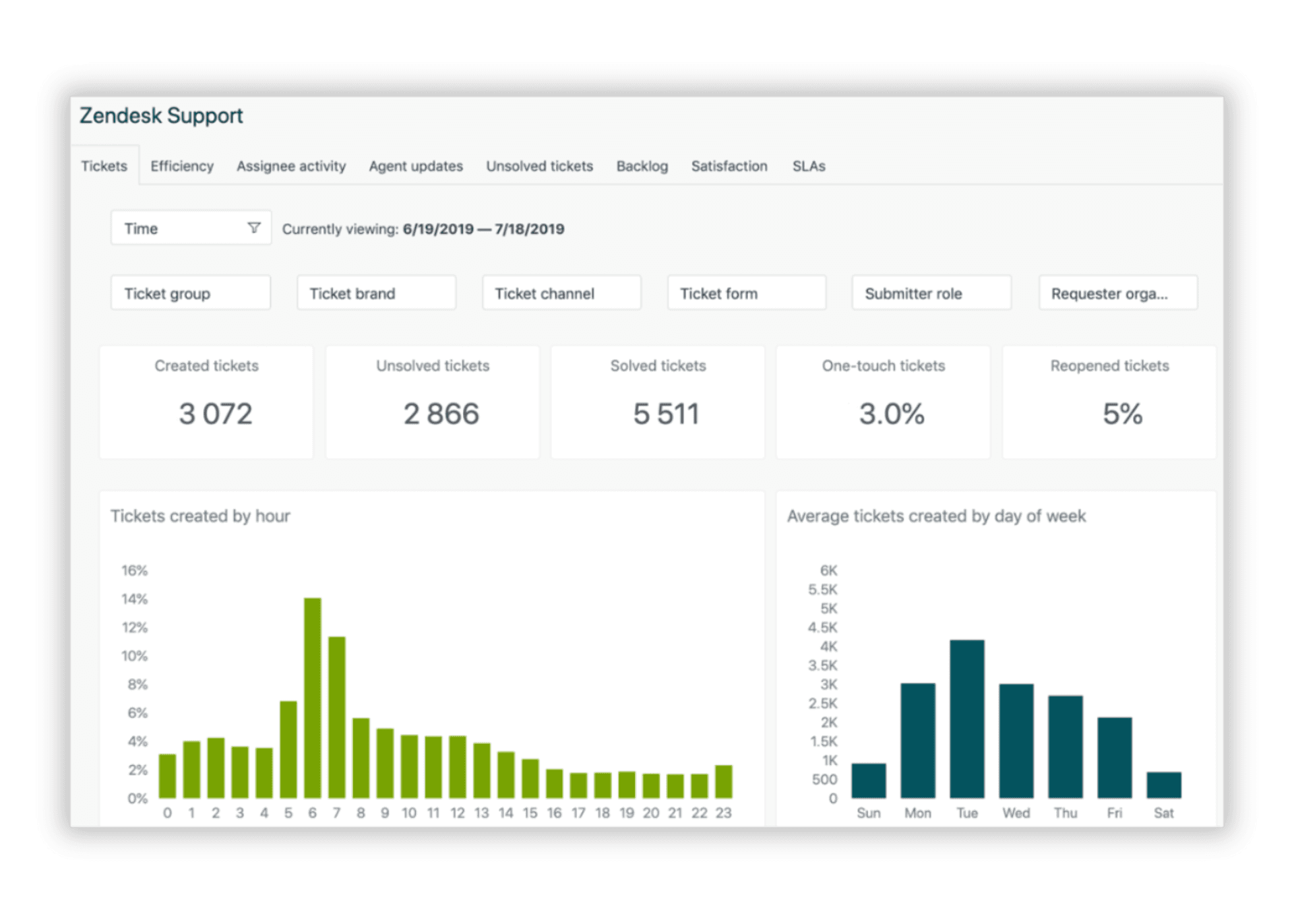
9. Zendesk QA: Support-Focused Quality Management
Positioning Statement: Zendesk QA provides conversation quality management specifically designed for customer support teams.
Core Functionality
Zendesk QA focuses on evaluating support conversation quality across tickets, chat, email, and social media. The platform allows QA teams to review conversations using customizable scorecards.
Key Features & Benefits
Customizable quality scorecards
Conversation review workflows for QA teams
Agent feedback and coaching tools
Integration with Zendesk and other help desks
Best Fit: Best for support teams already using Zendesk who need structured QA workflows.
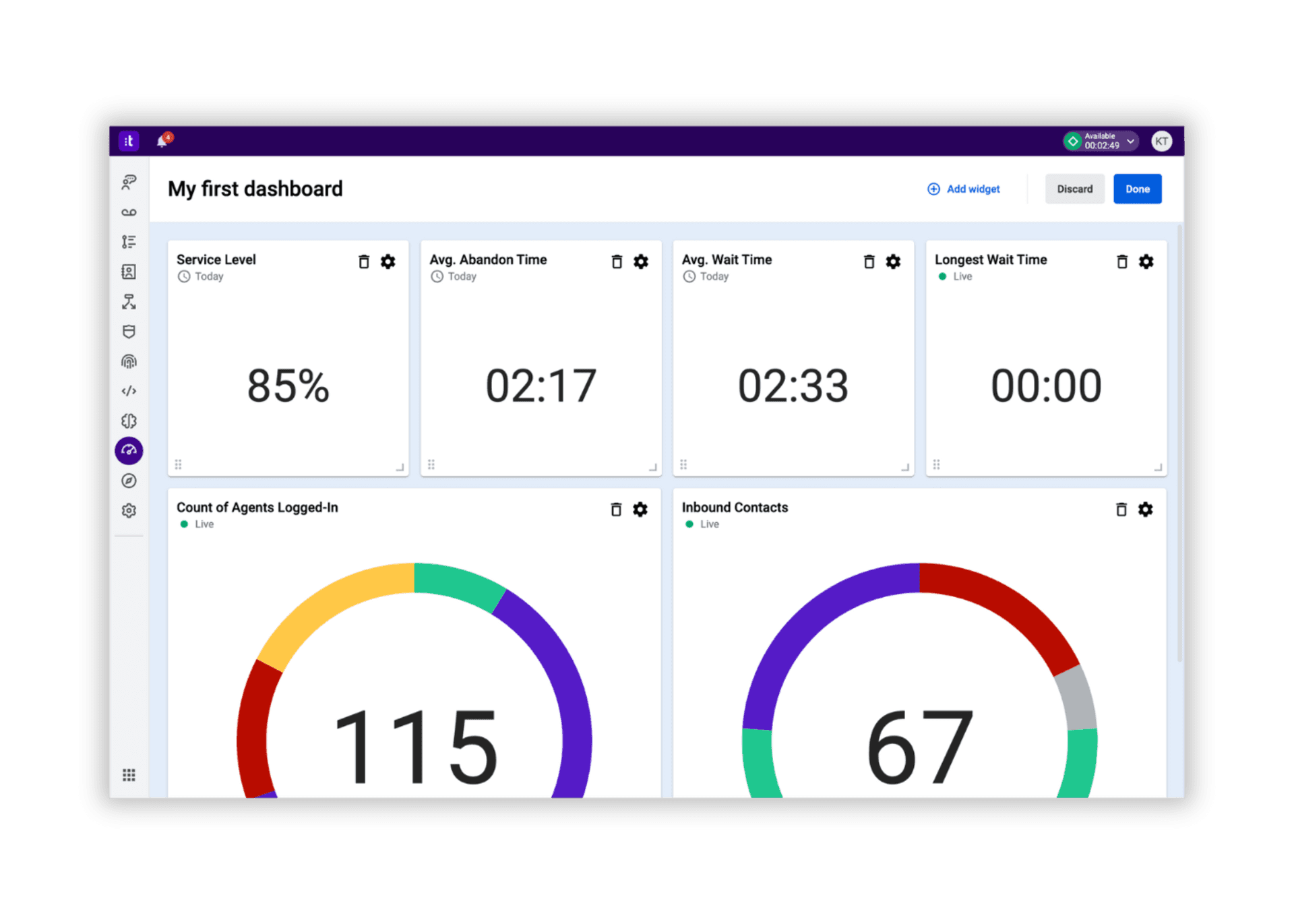
10. Talkdesk: Cloud Contact Center with Integrated Analytics
Positioning Statement: Talkdesk offers a comprehensive cloud contact center platform with built-in conversation intelligence.
Core Functionality
Talkdesk provides omnichannel contact center capabilities with conversation analytics integrated into the platform. Features include automated quality evaluation, sentiment analysis, and interaction analytics.
Key Features & Benefits
Integrated conversation analytics within contact center platform
Omnichannel interaction handling
Automated quality management
AI-powered self-service
Best Fit: Best for companies needing complete contact center platform replacement.
How to Choose the Right Conversation Intelligence Platform
Selecting a conversation intelligence platform is a major strategic decision. Evaluate each platform against your core business needs.
Coverage: Sampling vs. Complete Analysis
Many traditional systems analyze only 1-5% of conversations. This leaves massive blind spots. Rare but critical issues like emerging product bugs or churn signals can easily be missed.
Platforms like Kapiche that analyze 100% of conversations provide comprehensive coverage, ensuring no critical signal goes undetected.
Questions to ask vendors:
What percentage of our conversations will be analyzed?
Is your sampling methodology configurable or fixed?
Channel Support: Voice-Only vs. Omnichannel
The modern customer journey spans numerous channels. True customer understanding requires unifying insights from every touchpoint. Solutions like Kapiche unify these channels natively, connecting a customer's frustrated survey response with their previous support chat and follow-up phone call.
Analysis Approach: Keywords vs. AI Theme Detection
Traditional platforms rely on pre-configured categories and keyword spotting. The limitation: you can only find what you already know to look for.
Kapiche's qualitative analysis engine exemplifies an AI-native approach, automatically discovering themes from conversation data without prior configuration.
Use Case Alignment: Sales vs. Support vs. CX Strategic
Many well-known tools like Gong and Chorus were built for sales teams. CX and support teams have fundamentally different needs: insights into customer friction, product feedback, agent coaching opportunities, and churn drivers. Consider your primary use case and purchase a platform purpose-built to solve your specific challenges.
Time to Value: Implementation Complexity
Modern, cloud-native platforms can deliver value within two to four weeks. Complex legacy systems can take six to twelve months. Consider integration requirements, configuration needs, and user training required.
Pricing Model: Per-Agent vs. Consumption
Platform pricing models typically fall into per-agent or consumption-based categories. A per-agent model can become prohibitively expensive as your team scales. Ask about hidden costs for professional services, training, and custom integrations.
Integration Ecosystem
Conversation intelligence software should not operate in a silo. Look for out-of-the-box integrations with your contact center platform, CRM system, and survey tools. Ensure the vendor meets necessary data security and compliance standards (GDPR, CCPA, HIPAA).
Getting Started: Implementation Best Practices
Successfully setting up conversation intelligence software requires strategic planning and organizational alignment.
1. Define Clear Success Metrics
Before signing a contract, define what success looks like. Typical success metrics include:
Reduction in time to insight
Increase in QA coverage from 2% to 100%
Decrease in cost per quality evaluation
Number of critical issues detected before escalation
Improvement in First Contact Resolution (FCR)