Your support queue does not care that it is Monday morning. By the time you open your laptop, there are already three escalation threads, a manager asking why a VIP customer churned over the weekend, and an agent who handled the same complaint wrong four times in a row without anyone catching it. The frustrating part is not that it happened. It was all sitting right there in your call data, invisible, because nobody had a system to look.
That is the reality for most CX and support leaders right now. The data exists. The conversations are recorded. But without the right quality assurance process in place, it is just noise.
The upside is significant: companies with comprehensive QA programs see 23% higher customer satisfaction scores and 15% lower agent turnover. The gap between teams that invest in quality assurance and those who do not shows up directly in business outcomes.
The right contact center quality assurance software closes that gap. It turns your call data from noise into a live intelligence source that flags problems early, develops your agents consistently, and gives you the kind of visibility that makes Monday mornings a lot less chaotic. This guide breaks down exactly how these tools work and which seven platforms are worth your time.
Table of Contents
• The Problem With Traditional QA (Read This Before Choosing a Platform)
• What Does Call Center QA Software Do?
• 7 Best Call Center Quality Assurance Software Platforms
• How QA Software Transforms Your Contact Center Operations
• In Summary
• FAQs
The Problem With Traditional QA (Read This Before Choosing a Platform)
Most QA programs are built on a fundamentally flawed premise: that you can understand quality from 2–5% of interactions. You can’t.
Here is what that actually means in practice. Your QA team manually reviews a sample of calls each week. They flag some coaching opportunities, generate a scorecard, and send feedback to agents. The process feels rigorous. But the 95–98% of conversations nobody reviewed? They contain your real story. The product issue that’s quietly frustrating hundreds of customers. The policy change that’s driving call volume through the roof. The agent behaviour pattern that’s connected to your highest churn segment. None of it surfaces because it was never in the sample.
This is not a QA process problem. It is a visibility problem. And it means most contact centres are making consequential decisions about agent coaching, product feedback, CX investment, and churn prevention based on a fragment of what their customers are actually saying.
The 95% of conversations you’re not reviewing aren’t just missing — they’re where the real intelligence lives.
Traditional QA tools were designed to solve the wrong problem. They help you score agents on the calls you do review. They do not help you find the patterns hiding in the calls you never see. That is the distinction worth keeping in mind as you evaluate the platforms below.
The tools that close this gap, analyzing every conversation, not a curated sample, give you something fundamentally different: early warning signals for emerging issues, accurate churn risk detection, and the ability to connect what customers are saying to what is actually driving your business outcomes. That shift, from sampling to complete coverage, is the single biggest unlock in modern contact centre QA.
What Does Call Center QA Software Do?
Contact center quality assurance software is a platform that automatically evaluates customer interactions — whether those are phone calls, chat transcripts, or emails — against a defined set of standards. It scores agent responses, flags compliance risks, identifies coaching opportunities, and gives leaders the data they need to continuously improve service quality.
A common misconception is that QA software is just call recording or call monitoring. It is not. Basic call monitoring tells you what happened. Quality assurance software tells you why it happened, how often it happens across your entire team, and what to do about it. Another myth is that it is purely a compliance tool. While regulatory compliance is certainly a benefit, the real value sits in agent development, customer experience improvement, and operational efficiency gains that compound over time.
When quality management is set up well, the business benefits are significant. Agents get clear, consistent feedback. Managers spend less time on manual reviews and more time on strategic coaching. Customers feel the difference. And leadership gets reliable performance dashboards that tie agent behaviour to outcomes like first contact resolution, average handling time, and customer retention.
The consequences of skipping proper QA are just as real. Without a structured QA process, problems hide in your call data until they escalate. Agents who are struggling do not get the support they need. Compliance risks go undetected. Revenue leaks through poor customer experiences that nobody is tracking. A robust QA program is table stakes for running a competitive support operation.
7 Best Call Center Quality Assurance Software Platforms
Here are the seven strongest platforms for contact center quality assurance available today. Each one has distinct strengths, so the best fit will depend on your team size, tech stack, and goals.
1. Kapiche - Conversation Intelligence Built on 100% Coverage, Not Sampling
Every other platform on this list will help you score agent calls better. Kapiche asks a different question: what are the 95% of conversations you’re never reviewing trying to tell you?
The answer, for most contact centres, is a lot. Product failures nobody has connected to the support queue. Churn signals buried in call transcripts that no survey ever captured. Policy changes quietly driving up call volume while the weekly QA scorecard looks fine. These patterns do not show up in a 2–5% manual sample. They show up when you analyze everything.
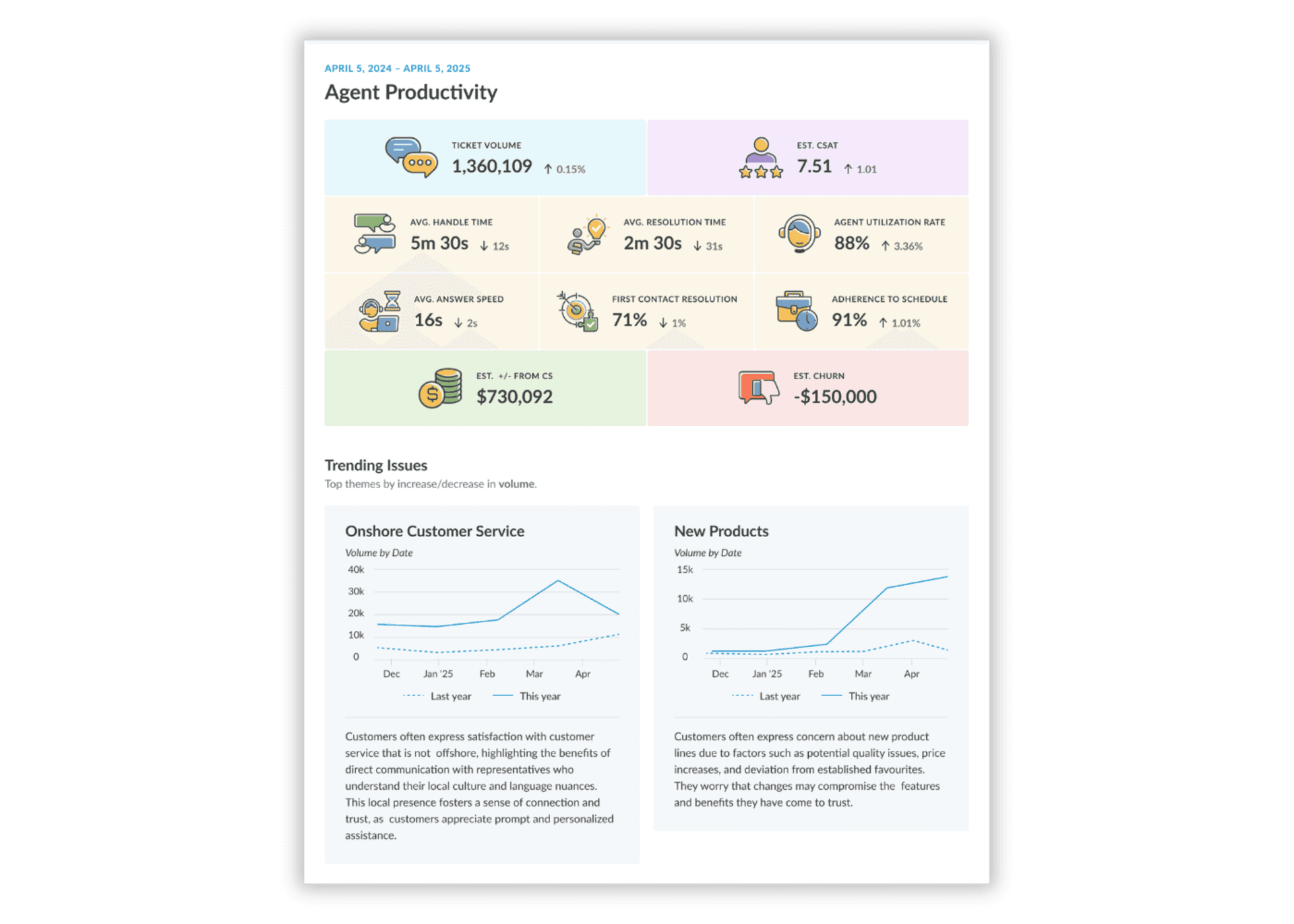
That is what Kapiche is built to do. Its AI Enrichment Layer processes every conversation automatically, structuring unstructured data into actionable intelligence without requiring pre-built models or a data science team. Each interaction gets enriched with fields your standard QA tool simply does not generate:
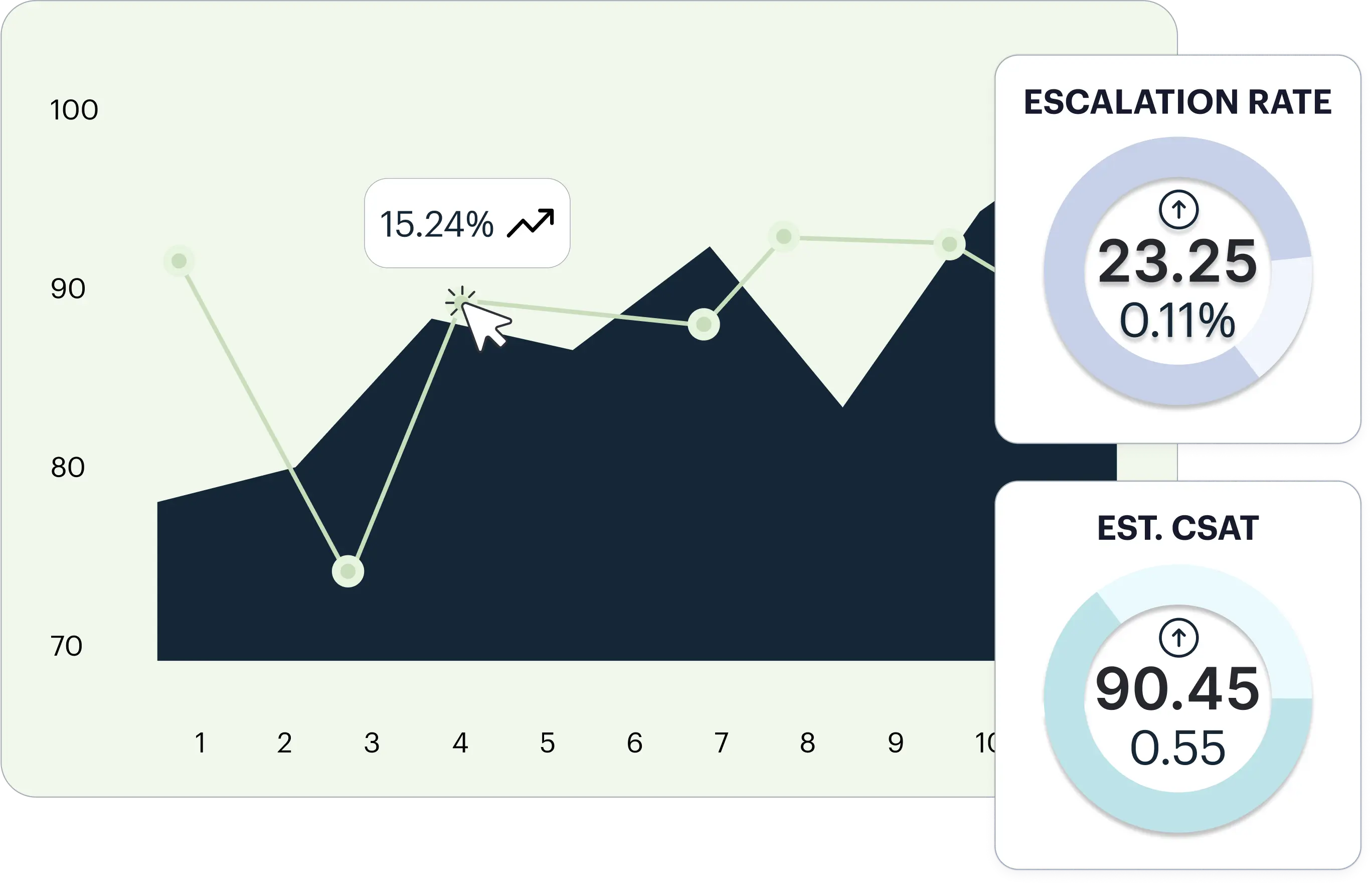
Estimated CSAT on every call — even without a survey response
Churn risk signals detected from conversation patterns, not lagging metrics
Agent behaviour flags: missed resolution opportunities, lack of closure, empathy gaps
Reason for contact classification and journey segment mapping
Escalation status, tone shifts, and conversation metadata
The result is a complete intelligence picture across 100% of your interactions, not a scorecard based on the fraction of your QA team's time to review. Emerging issues surface in hours, not weeks. At-risk customers get flagged before satisfaction scores decline. And the connection between what agents are saying and what is driving churn or retention becomes visible in a way that sampled QA simply cannot deliver.
“Kapiche’s deep-dive capabilities uncover the true reasons behind customer contact, eliminating reliance on potentially inaccurate manual input. This insight into the ‘why’ enables us to be action-focused, proactively addressing issues to deliver better service.” — Head of Research and Marketing Insights, one of Australia’s largest gaming and entertainment companies
Where most QA tools keep insights inside the contact centre, Kapiche connects them to the broader business. Product teams get a real signal on feature friction. CX leaders can prove the revenue impact of support improvements. Executives see the link between conversation trends and retention metrics. That is a fundamentally different value proposition from a platform designed to help QA managers tick off evaluation forms.
Kapiche integrates with your existing contact centre stack and surfaces findings in clear, shareable dashboards built for presenting to leadership — not just for internal QA review.
Key Capabilities
100% automated conversation analysis using AI and NLP, eliminating sampling bias entirely
AI-powered CSAT prediction on every interaction — no survey response required
Churn risk signal detection from conversation patterns before satisfaction metrics decline
Agent behaviour flags covering empathy, missed resolution, closure, and escalation patterns
Theme and sentiment detection across all channels for early issue identification
Customizable QA scorecards aligned to your specific standards and business goals
Performance dashboards connecting agent behaviour directly to customer outcomes
Deep customer feedback analysis, uncovering systemic process improvements, not just individual agent issues
Best for: CX and support leaders in mid-to-enterprise businesses who need to move beyond sampling-based QA to genuine conversation intelligence at scale. Particularly strong for organizations where support data should be informing product, CX strategy, and executive decision-making — not just agent coaching.
2. Five9 - Comprehensive Contact Center Platform With Integrated QA
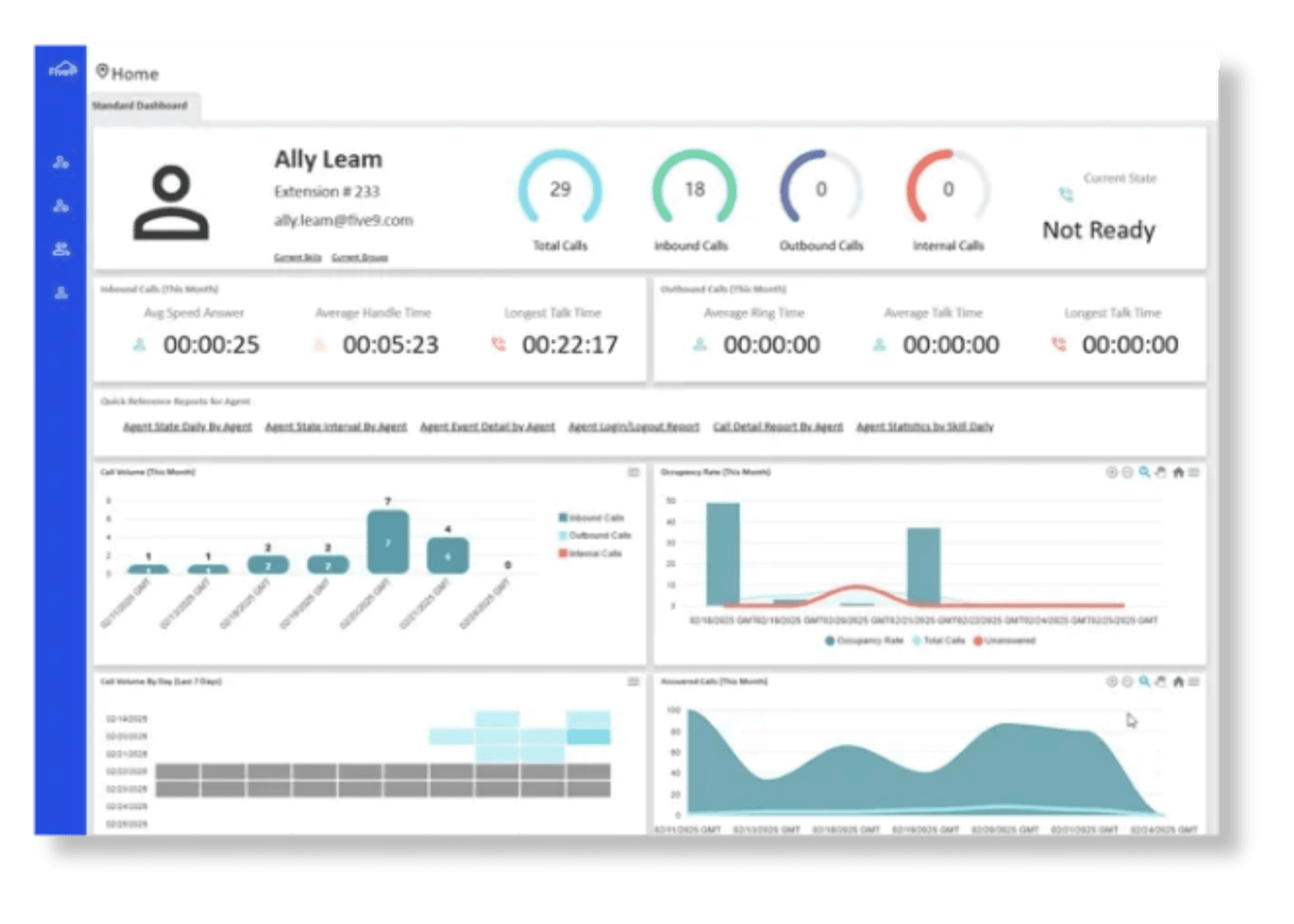
Five9 is a well-established cloud contact center platform that bundles quality management directly into its broader suite. For teams that want a single vendor for their contact center infrastructure and their QA capabilities, Five9 is worth a close look. The quality monitoring tools sit alongside workforce management, omnichannel routing, and reporting in one unified environment.
Five9’s QA features cover call monitoring, screen recording, and automated evaluations using AI-powered speech analytics. QA managers can build scorecards to evaluate interactions consistently, and the platform includes built-in coaching tools so that feedback delivery happens inside the same system. It is a solid all-in-one choice for teams that do not want to manage multiple point solutions.
The trade-off with an integrated platform like Five9 is that the depth of any one feature area tends to be narrower than a specialist tool. Its QA is built around the interactions it can see, which still depends on what your team configures for review. For teams that want to understand patterns across every conversation, a dedicated conversation intelligence layer will be needed alongside it.
Key Capabilities
Unified platform covering contact center operations and quality management in one tool
AI-powered speech analytics and transcription for automated QA
Screen recording alongside call capture for a complete interaction context
Customizable QA scorecards and evaluation workflows
Built-in coaching and feedback tools
Strong omnichannel support across voice, chat, and email
Best for: Mid-market and enterprise contact centers looking for a single vendor solution that covers both operational infrastructure and QA needs without significant integration overhead.
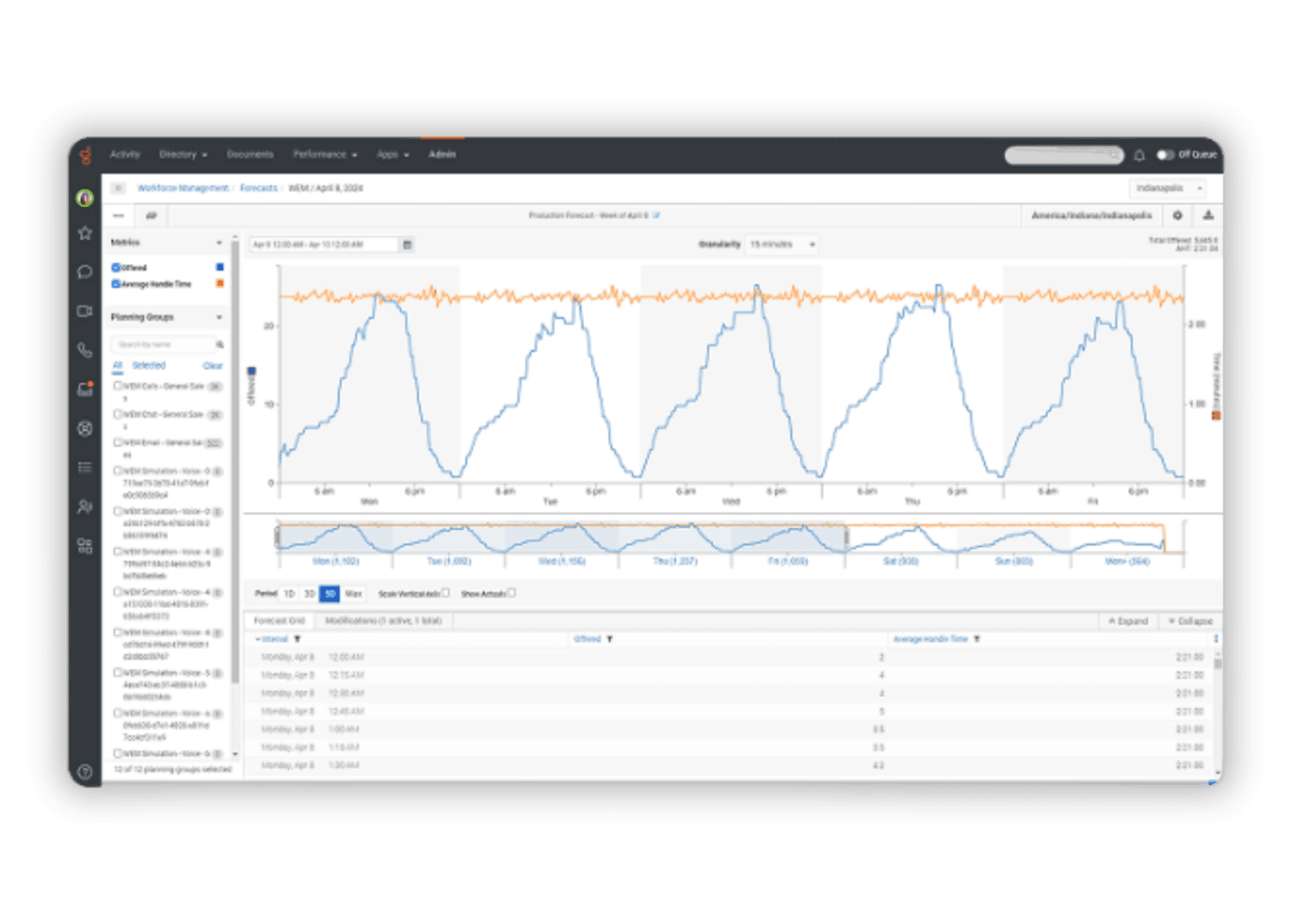
3. Genesys Cloud CX - Enterprise-Grade Quality Management Suite
Genesys Cloud CX is one of the leading enterprise contact center platforms globally, and its quality management capabilities reflect that positioning. It supports large-scale quality assurance across multiple channels, time zones, and business units, making it a strong choice for complex enterprise deployments where consistent service delivery across a large team is the primary challenge.
The platform includes automated call scoring, speech analytics, and workforce engagement management tools, all within the same cloud environment. Genesys has invested heavily in AI capabilities, including tools that can identify training needs automatically based on QA scores and interaction patterns. Its reporting suite gives contact center leaders a comprehensive view of both individual agent performance and team-wide quality trends.
Genesys Cloud CX is a substantial platform investment, and the implementation and licensing complexity reflect that. It is best suited to organizations with the internal resources to configure and get the most out of it.
Key Capabilities
Enterprise-grade quality management at scale across multiple teams and geographies
AI-powered interaction scoring and automated evaluations across voice and digital channels
Built-in workforce engagement management to connect QA to agent retention
Detailed reporting and performance dashboards for leadership visibility
Strong ecosystem of integrations with CRMs and analytics platforms
Continuous improvement tools to track performance against quality benchmarks over time
Best for: Large enterprise contact centers that need robust, scalable quality management built into the same platform handling their routing, workforce management, and customer engagement.
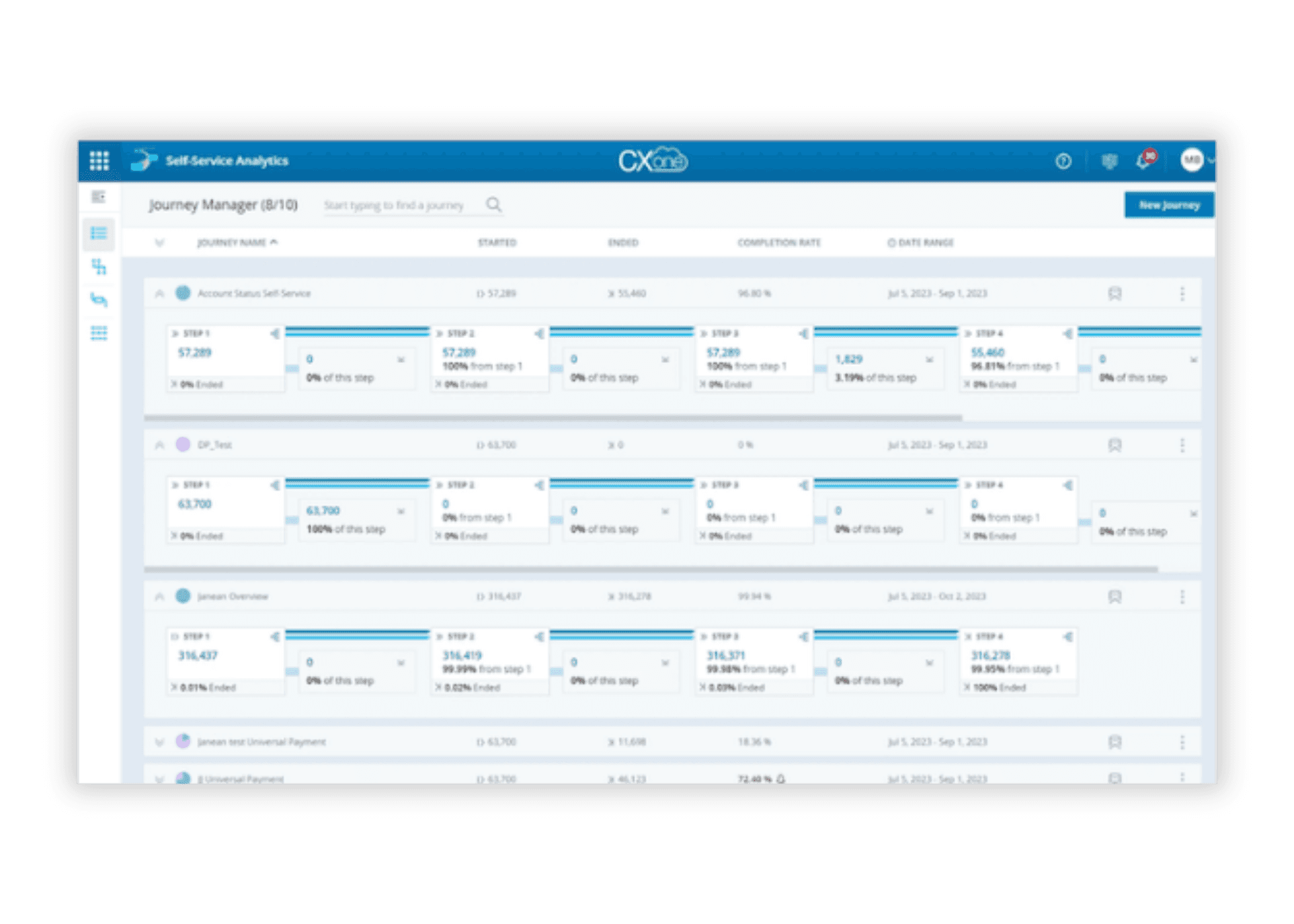
4. NICE CXone - Workforce Optimization With Advanced Analytics
NICE CXone is a well-known name in workforce optimization, and its QA capabilities are among the most mature on the market. The platform combines automated QA tools, interaction analytics, and workforce management in a tightly integrated suite. It is designed to help QA teams move beyond random sampling to a more systematic approach to quality assurance across the entire contact center.
One of NICE CXone’s standout features is its analytics depth. The platform can surface patterns across thousands of interactions, helping leaders identify compliance risks, script adherence issues, and agent improvement opportunities that would be impossible to spot through manual spot-checks. The coaching tools are well-developed, with workflows that make it easier to turn QA findings into structured coaching sessions.
NICE CXone tends to be positioned toward enterprise customers, and the pricing reflects that. For organizations serious about workforce optimization and data-driven agent development, the depth of capability is hard to match within its tier.
Key Capabilities
Comprehensive automated QA with AI-driven interaction scoring across voice and digital channels
Advanced speech analytics and NLP for deep interaction insight
Compliance and script adherence monitoring for regulatory risk management
Integrated coaching and feedback tools with structured improvement workflows
Strong workforce management integration connecting quality data to scheduling and planning
Detailed QA score and trend reporting to spot emerging issues
Best for: Enterprise contact centers prioritizing deep workforce optimization, compliance management, and data-driven coaching at scale.
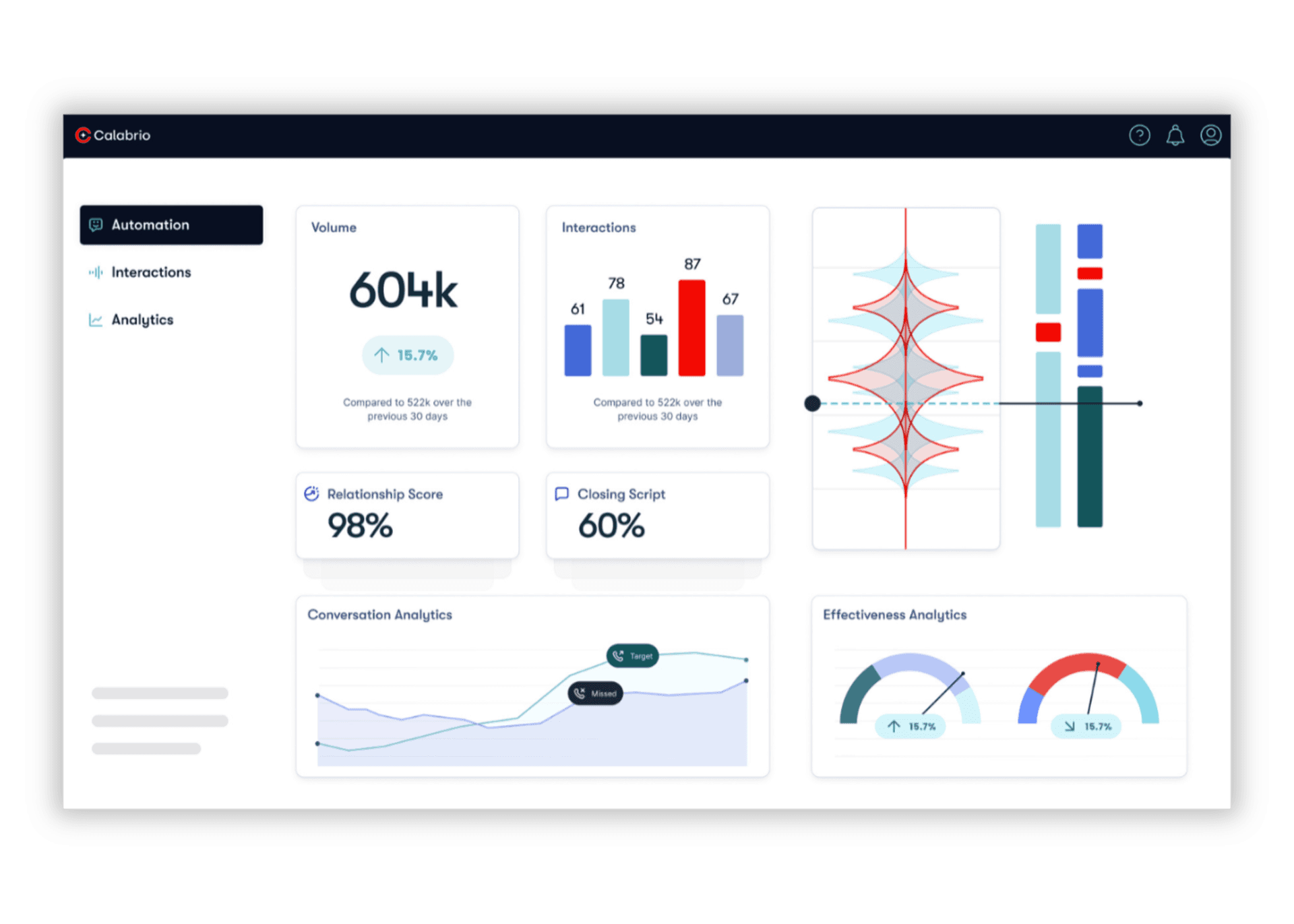
5. Calabrio - Workforce Performance Management Platform
Calabrio positions itself at the intersection of workforce management and quality assurance, making it a strong choice for contact center leaders who want to connect agent scheduling, performance data, and QA insights in a single view. Its quality management features include automated call scoring, screen recording, and analytics that feed into both individual coaching and team-level planning decisions.
Calabrio has built a reputation for being more approachable than some of the larger enterprise platforms, both in terms of implementation complexity and user experience. QA analysts tend to find the interface intuitive, which matters when you are building internal adoption of a QA program. The platform also offers solid customer feedback integration tools, so quality data from the contact center can sit alongside other voice-of-customer inputs.
Key Capabilities
Integrated workforce management and QA in a single platform
Automated evaluations and AI-assisted scoring to reduce reliance on manual QA
Screen recording and interaction capture across channels
User-friendly interface that supports internal adoption among QA analysts and managers
Strong customer feedback integration to connect contact center data to broader CX insights
Reporting tools to track performance trends and identify systemic process improvements
Best for: Mid-market contact centers looking for a workforce performance management platform that integrates QA without requiring a separate specialist tool.
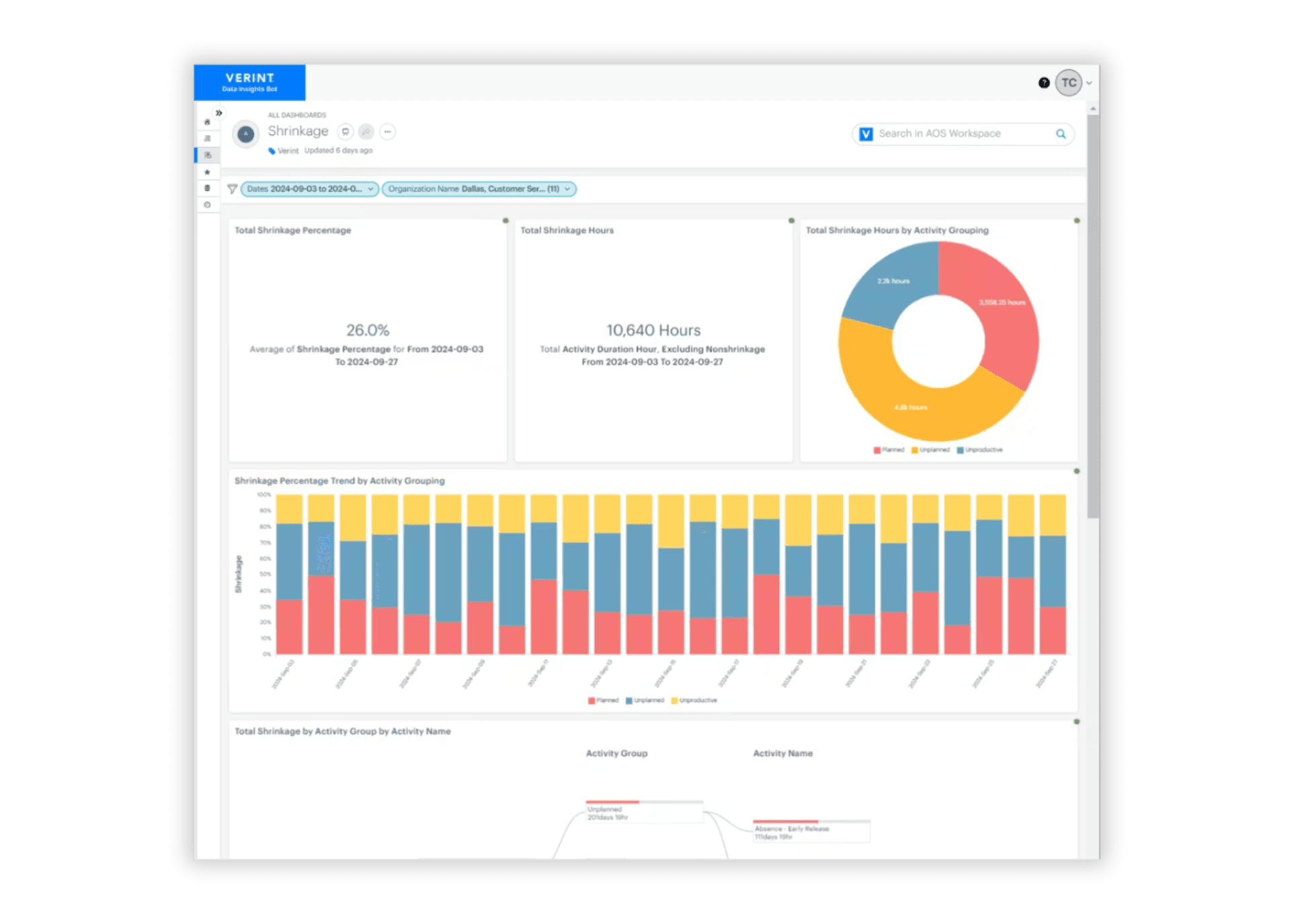
6. Verint - Customer Engagement Optimization Platform
Verint is a longstanding leader in the customer engagement intelligence space, and its QA capabilities are part of a broader platform that covers workforce management, analytics, and digital engagement tools. Verint’s strength lies in its breadth. It can handle complex enterprise requirements across voice, digital, and back-office operations, with quality management features that scale to large, distributed contact center teams.
The platform’s AI capabilities are particularly notable. Verint uses machine learning to automate interaction scoring, identify coaching opportunities, and surface compliance risks across high call volumes. Its open platform architecture also makes integration with existing enterprise tech stacks relatively straightforward.
Like many enterprise platforms, Verint works best when a team has dedicated resources to configure and manage the system. The payoff in terms of insight depth and operational efficiency is strong, but it requires investment to unlock.
Key Capabilities
Broad platform covering quality management, workforce management, and digital engagement
AI-driven automated evaluations and interaction scoring at enterprise scale
Open architecture for flexible integration with existing enterprise systems
Strong compliance and regulatory monitoring capabilities
QA workflows designed for large, distributed teams managing high interaction volumes
Analytics connecting customer sentiment to agent and team performance metrics
Best for: Large enterprise organizations with complex, multi-channel contact center environments that need a comprehensive, configurable engagement optimization platform.
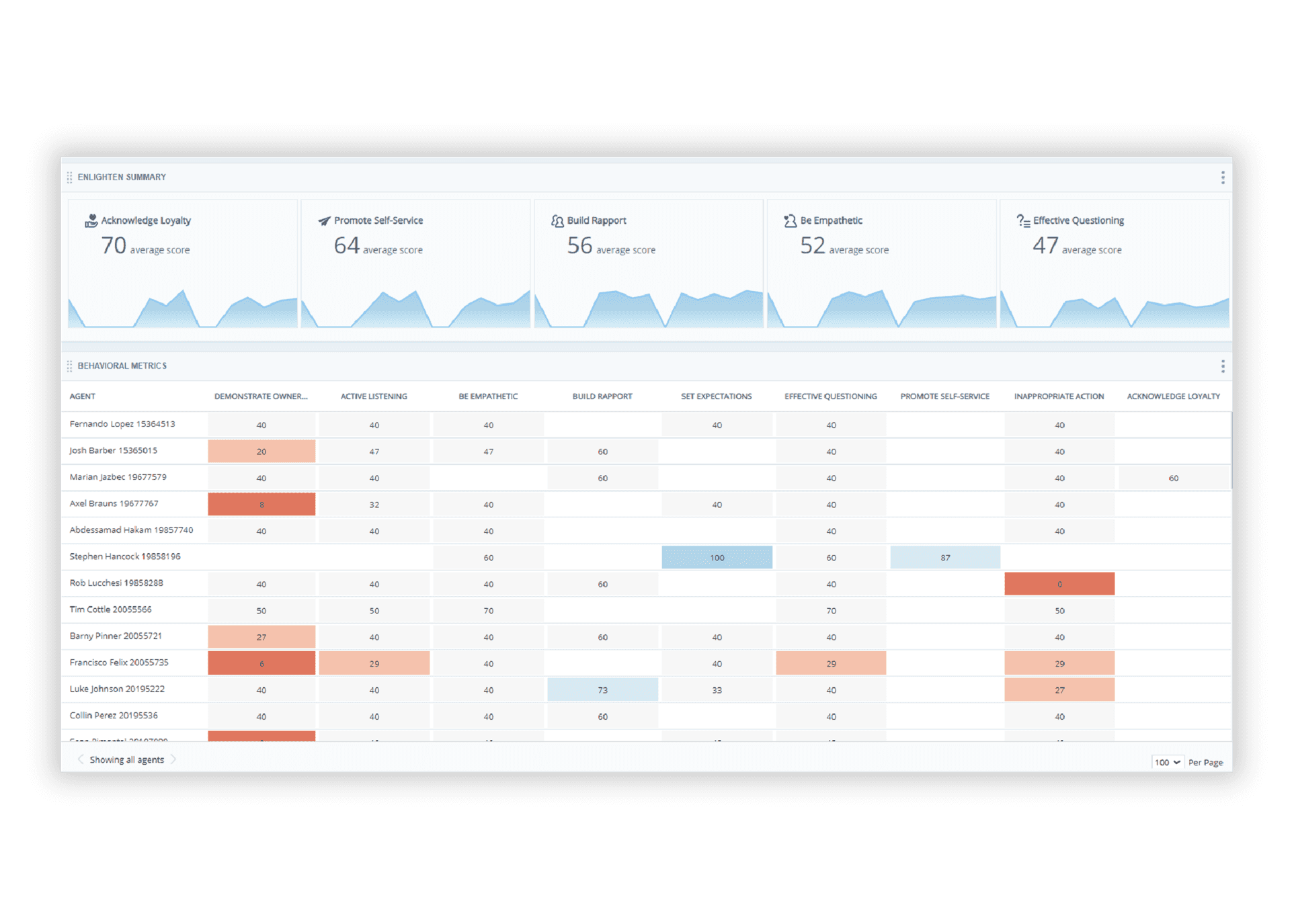
7. Enlighten AI by NICE - Real-Time Guidance and Automation
Enlighten AI is NICE’s dedicated AI layer, purpose-built to bring real-time intelligence into contact center interactions. Where traditional QA tools review what happened after the fact, Enlighten AI operates in the moment. It can guide agents during live calls with suggested next steps, flag compliance risks as they arise, and surface the customer context agents need to deliver a better experience right now.
The platform uses behavioural AI trained on billions of customer interactions to score agent performance, predict customer satisfaction outcomes, and automate routine QA workflows. It goes deeper than basic automated scoring by identifying specific behavioural patterns that are statistically linked to customer happiness and first contact resolution.
Enlighten AI is designed to complement the broader NICE CXone platform rather than function as a fully standalone product. Teams already on the NICE infrastructure will get the most value from it.
Key Capabilities
Real-time agent guidance during live interactions to improve performance in the moment
Behavioural AI trained on large datasets to identify what drives customer satisfaction
Fully automated QA with AI scoring across 100% of interactions
Predictive analytics to anticipate customer needs and flag at-risk interactions early
Script adherence and compliance monitoring with real-time alerts
Tight integration with NICE CXone for a unified contact center experience